
Plain vs. Seasoned Rice Vinegar: Which Should You Buy?
Read the label to tell plain rice vinegar from seasoned vinegar, then compare them on cucumber and choose one for sushi rice or dressing.

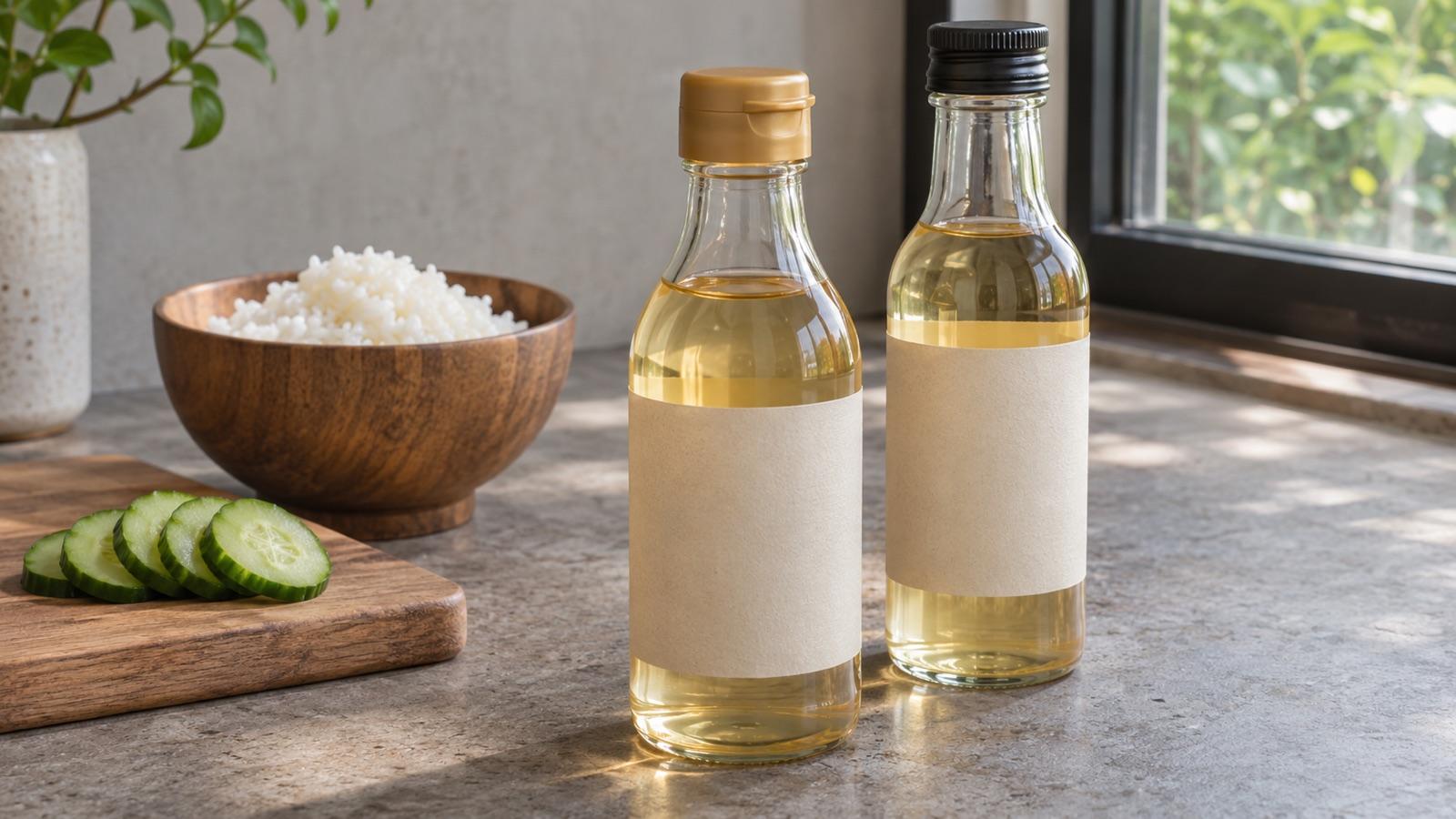
Choose plain rice vinegar when you want to control the sugar and salt in a dish. Seasoned rice vinegar is a ready-to-use blend that usually contains added sugar and salt. If a recipe lists vinegar, sugar and salt separately, the plain bottle makes each easier to adjust. If it calls for prepared sushi seasoning, the seasoned bottle saves a step. The two may look nearly identical on the shelf, so check the back of the bottle.
Three things to read on the label
Start with the product name. “Unseasoned” usually points to plain vinegar, while “seasoned” and “sushi seasoning” suggest a blend. A sushi picture does little to distinguish them because plain vinegar is also the base for homemade sushi seasoning. When the fronts look alike, read the smaller product description and ingredient list.
Look for added sugar and salt and count them toward the seasoning in your recipe. Some blends also contain kombu stock. Mizkan’s plain product page lists rice vinegar as the ingredient. Its home sushi guide shows a ready-made sugar-and-salt blend and a separate kombu blend. Check the actual bottle because the formula varies by product.
Finally, look for the stated acidity and check the serving size in the nutrition panel. Acidity and sugar content tell you different things. A sweet taste cannot tell you the acid percentage. If one label gives figures per 100 ml and the other per 15 ml, convert them to the same volume before comparing.
For example, a label showing 3 g sugar per 15 ml works out to 1 g in a 5 ml tasting measure. Those numbers illustrate the calculation. A small amount of sugar on a plain vinegar’s nutrition panel does not by itself indicate added sugar. Use the ingredient list to check for additions and the volume calculation to estimate what goes into your spoon.
Which bottle works for sushi rice?
If your recipe measures sugar and salt separately, start with plain vinegar. Make the seasoning first and add it as directed. This lets you reduce only the salt next time if, for example, you serve the rice with salty soy sauce. With a prepared blend you cannot measure the three components independently.
For a prepared blend, read what the bottle bases its dose on. A measure given for cooked rice should be applied to cooked rice. With an unfamiliar brand, put part of the suggested amount on a small sample, distribute it and taste before adding more. Do this before adding any separate sugar or salt, especially when scaling a batch.
Compare them on two plates of cucumber
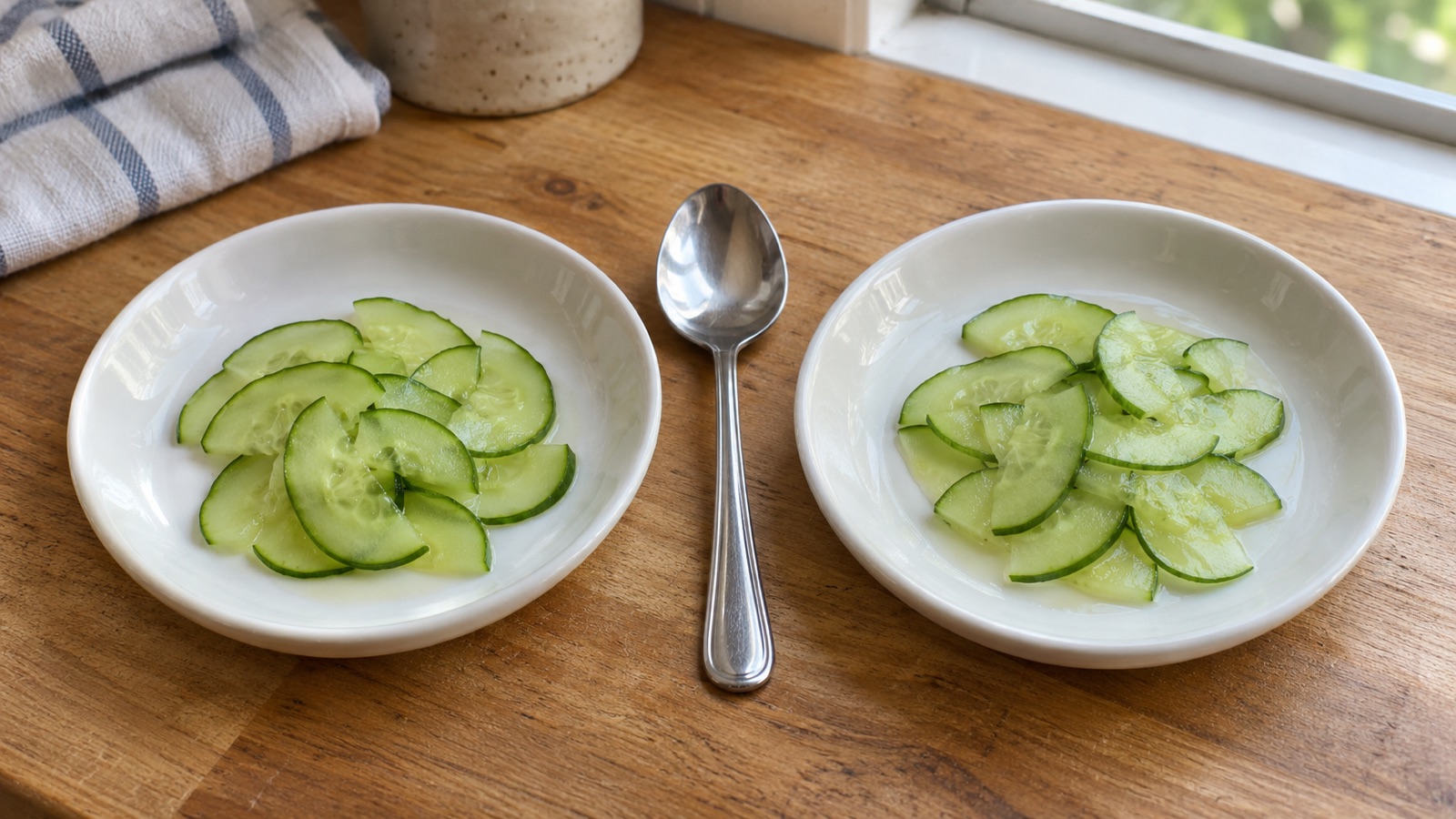
Slice one cucumber into thin half-moons and put 50 g on each plate. Add 5 ml plain vinegar to one and 5 ml seasoned vinegar to the other. Toss and leave both for 2 minutes. Leave out oil, salt, sugar and herbs. If you want to taste blind, write the product names on slips under the plates.
Taste one slice from each. Compare the initial tartness, then the sweetness and salty finish. Using the same cucumber, volume and waiting time makes the difference easier to isolate. This test compares flavor. It cannot measure acidity. Next, try a pinch of sugar on the plain sample to see how it changes the bite without adding more vinegar.
Adjust a dressing if you opened the other bottle
Test in a small bowl before dressing the whole salad. The wasabi cucumber salad, for example, uses white vinegar and sugar. If you want to try a different flavor, use plain rice vinegar in a small portion. If you only have seasoned vinegar, hold back the recipe’s added sugar at first. Taste the dressing on cucumber as well as on its own, since the vegetables can dilute it.
If the result is too sweet or salty, use less dressing or toss it with more plain cucumber. Dilution weakens sweetness, saltiness and tartness together. If you only want to change one, start with plain vinegar next time. Write down the product and amount that worked.
Vinegar for shelf-stable pickles
The tasting and dressing adjustments above are for food you serve straight away. For shelf-stable pickles, use a tested recipe and follow its specified vinegar type, acidity and proportions. The National Center for Home Food Preservation advises against using vinegar of unknown acidity or altering the ratio of vinegar, water and food. Check the recipe requirements before using either bottle for canning.
Sources
Mizkan’s plain rice vinegar label · Mizkan’s guide to sushi vinegar at home · NCHFP’s pickling guidance
İyi Bir Yemek
Food Researcher & Writer
Reader Comments & Contributions
Be the first to share your thoughts on this post