
Mastering Knife Skills: Professional Culinary Cutting Techniques and Kitchen Guide
Master professional culinary knife skills: Julienne, Brunoise, Mirepoix, Batonnet, Chiffonade, and the essential pinch grip to elevate your everyday cooking.

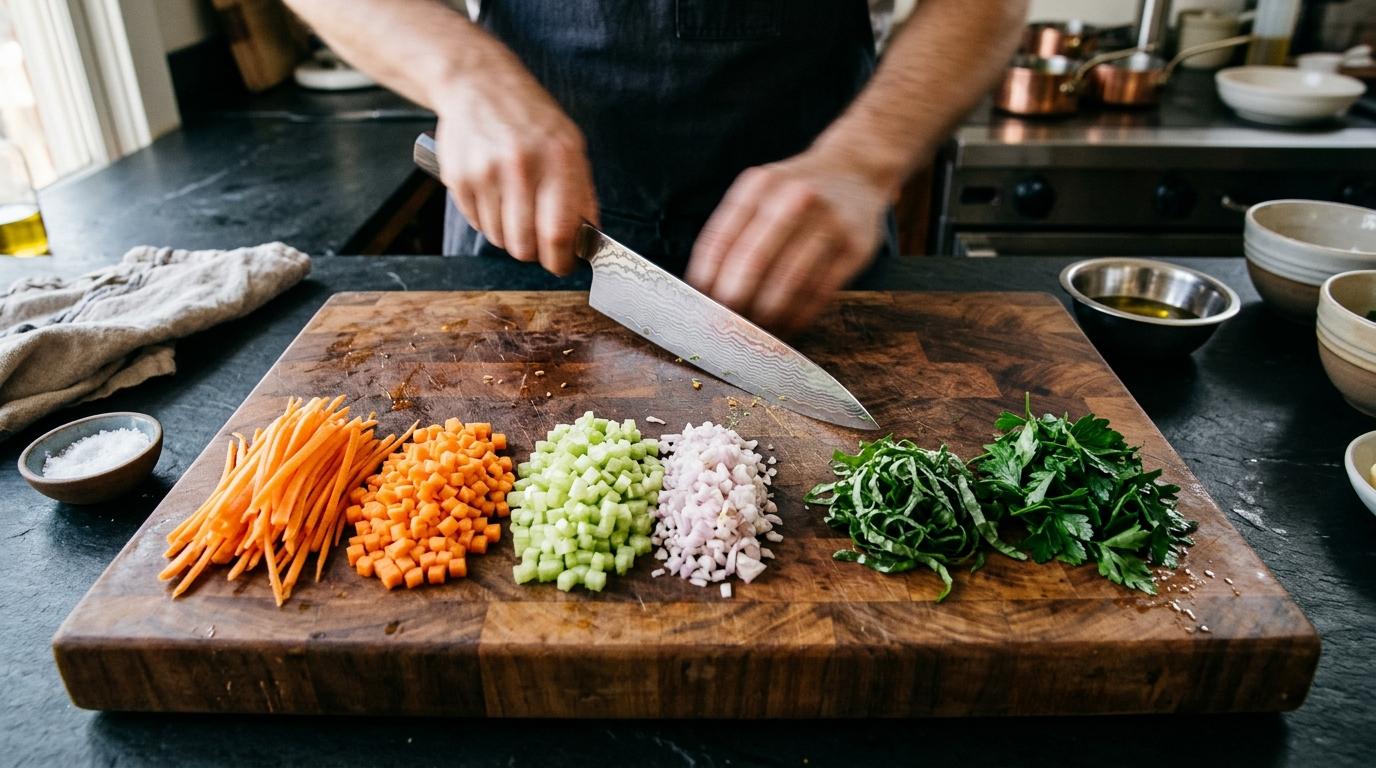
Step into any professional culinary kitchen, and the rhythmic, precise, and crisp cadence of a chef's knife against a wooden board immediately sets the tone. In the hands of an experienced chef, a knife does far more than chop ingredients; it dictates cooking consistency, sauce emulsification, tactile mouthfeel, and plate architecture. Mastering knife skills is the single most fundamental bridge that separates enthusiastic home cooking from true culinary excellence.
1. Ergonomics & Safety: How to Hold a Chef's Knife
Precision and speed never come from brute forearm force; they stem from proper grip leverage, blade balance, and hand protection.
The Pinch Grip
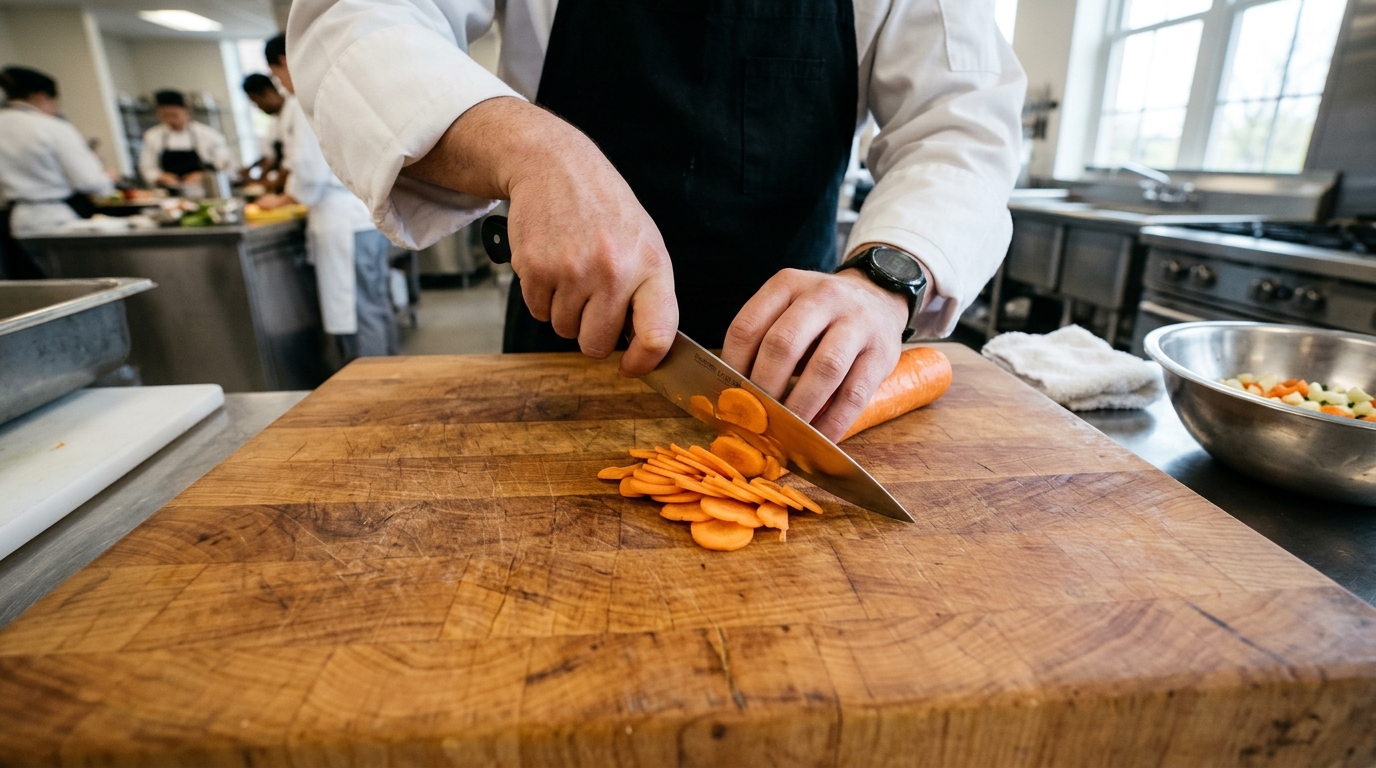
Holding a chef's knife like a hammer by grasping solely the handle leads to wrist fatigue and poor directional control. The professional standard is the pinch grip: your thumb and the side of your curled index finger firmly pinch the heel of the steel blade itself, right where it meets the bolster. Your remaining three fingers wrap securely yet gently around the handle. This makes the knife a seamless physical extension of your arm.
The Protective Claw Hand
Your non-knife guide hand must always form a tight, curved "claw" with fingertips curled inward and fingernails facing the board. The flat side of the knife blade rests gently against the first knuckle of your middle finger as the knife moves in a smooth rocking motion. This safeguards your fingertips from accidental cuts while allowing you to gauge slice thickness down to the millimeter.
2. The 7 Classical French Culinary Knife Cuts
1. Julienne (Matchstick Cut)
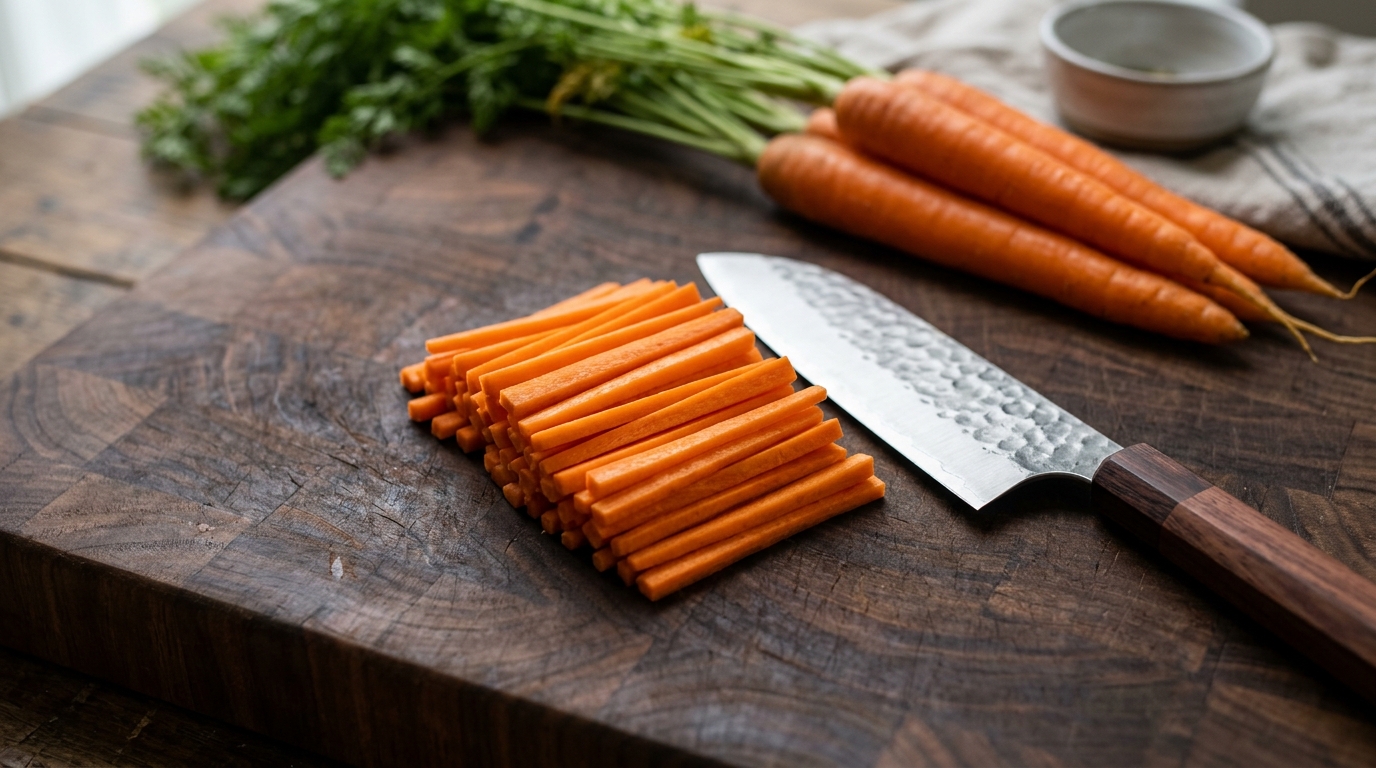
One of gastronomy's most famous and foundational cuts. Vegetables are sliced into ultra-fine, uniform matchsticks measuring exactly 2 mm × 2 mm × 4–5 cm. Commonly applied to carrots, zucchini, daikon, and bell peppers. It guarantees rapid, even cooking in stir-fries, crisp bite in salads, and elegant soup garnishes.
2. Brunoise (Fine Micro-Dice)
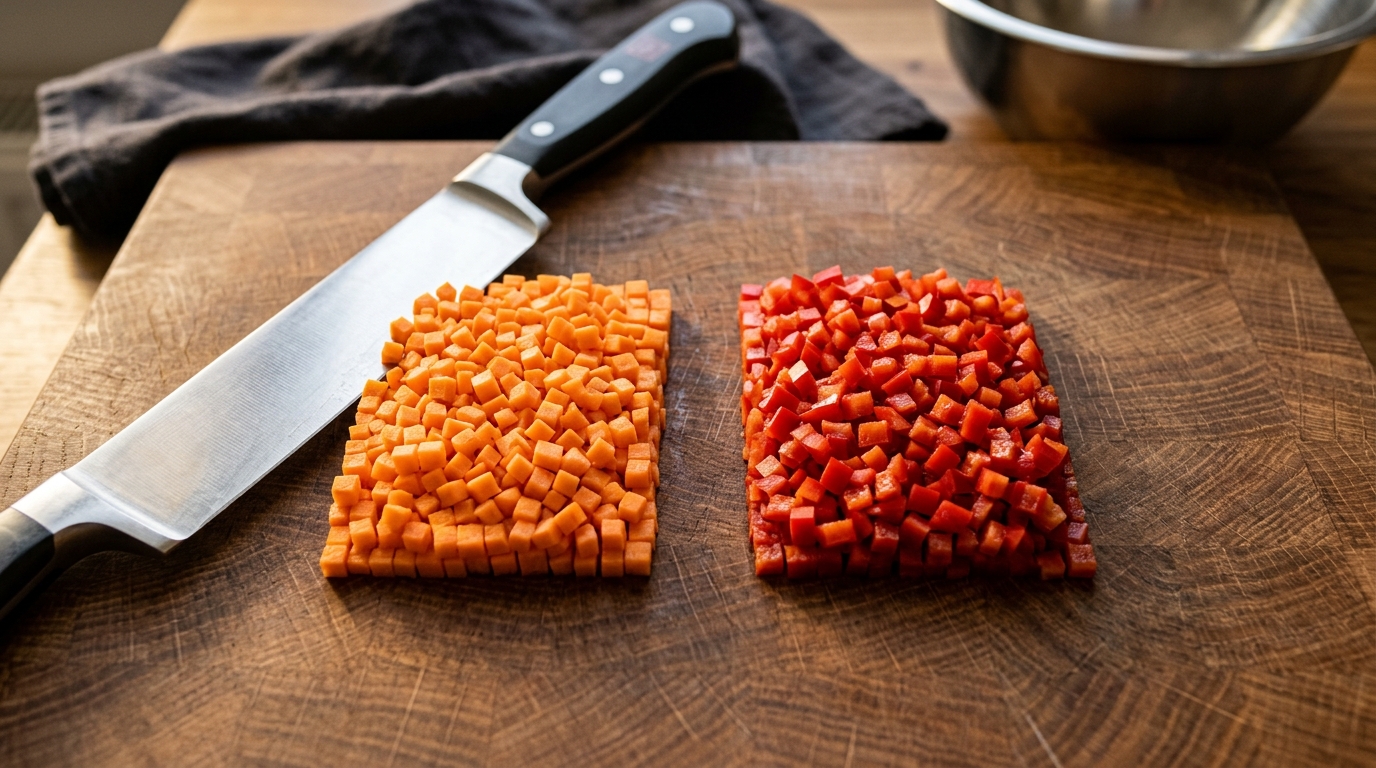
The natural culinary continuation of the julienne. Gather the julienne sticks together and cut across them at exact 2 mm intervals to produce minuscule 2 mm × 2 mm × 2 mm cubes. Brunoise is celebrated in classical sauces, clear consommés, and delicate compound butters for its jeweled appearance and instant flavor dispersion.
3. Batonnet (Small Stick Cut)
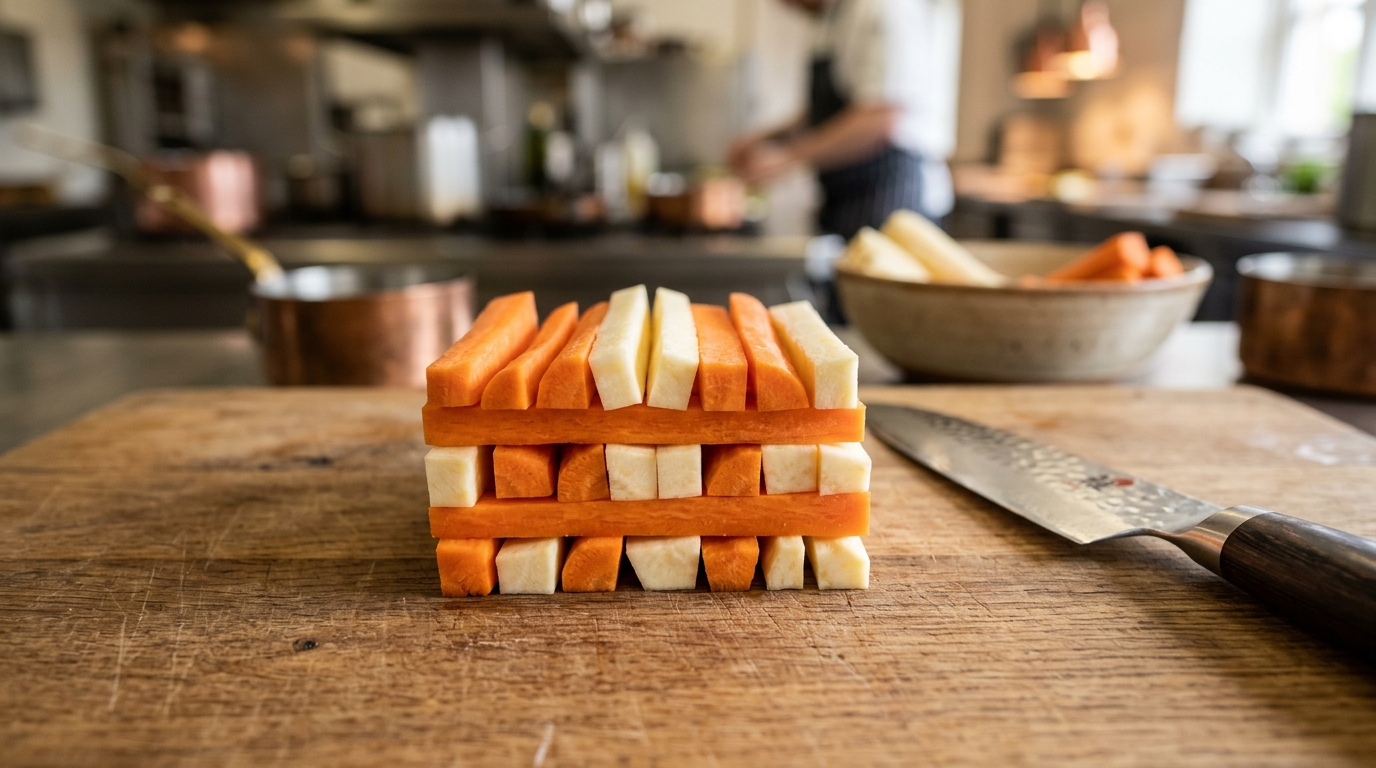
The sturdier, thicker sibling of the julienne. Standard dimensions are 6 mm × 6 mm × 5–6 cm. This cut is the benchmark for roasted root vegetables, crudités, and hand-cut fries, offering a caramelizable exterior while retaining a tender, moist core.
4. Macédoine (Medium Dice)
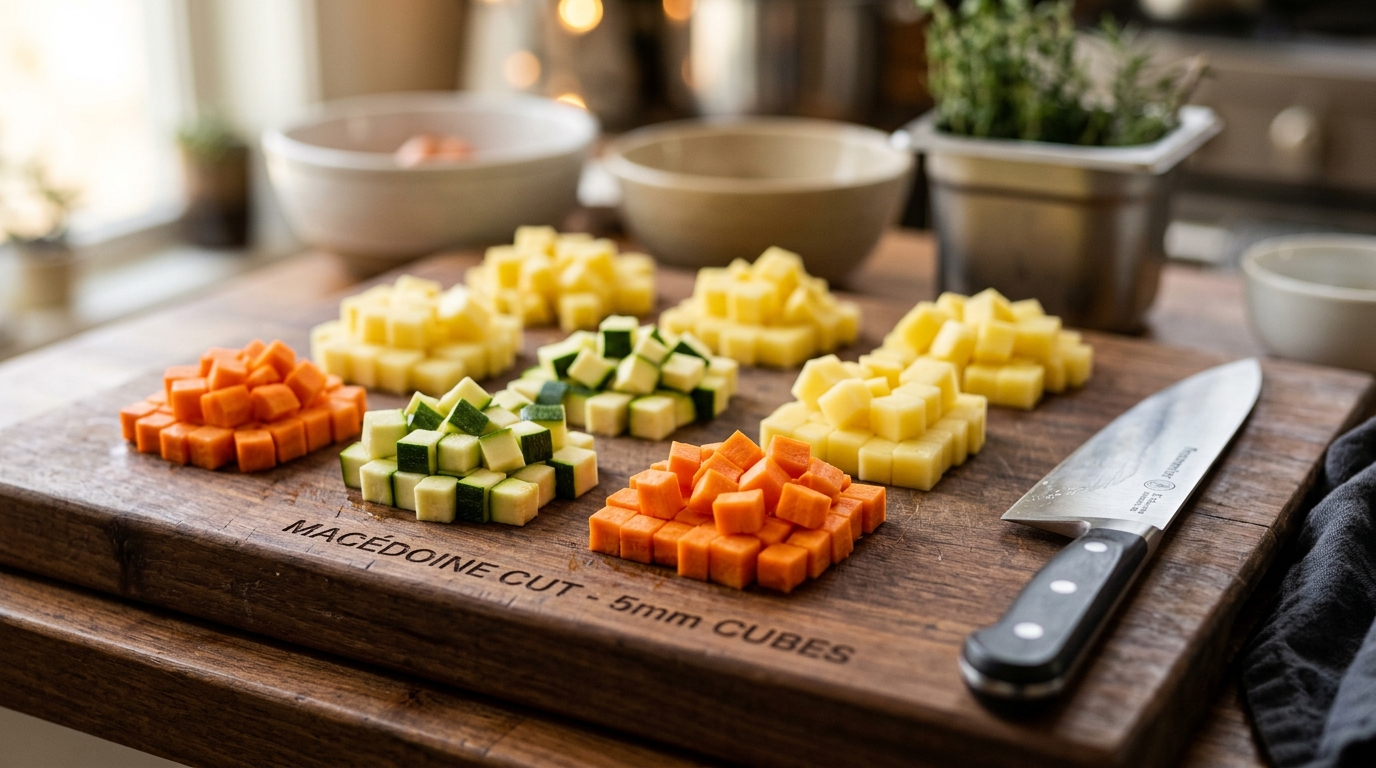
Produced by slicing batonnet batons crosswise into neat 5–6 mm cubes. Essential for classical Russian salad (Salade Russe), vegetable sautés, and hearty vegetable stews, ensuring every ingredient softens at the exact same rate.
5. Mirepoix (Aromatic Base Cut)
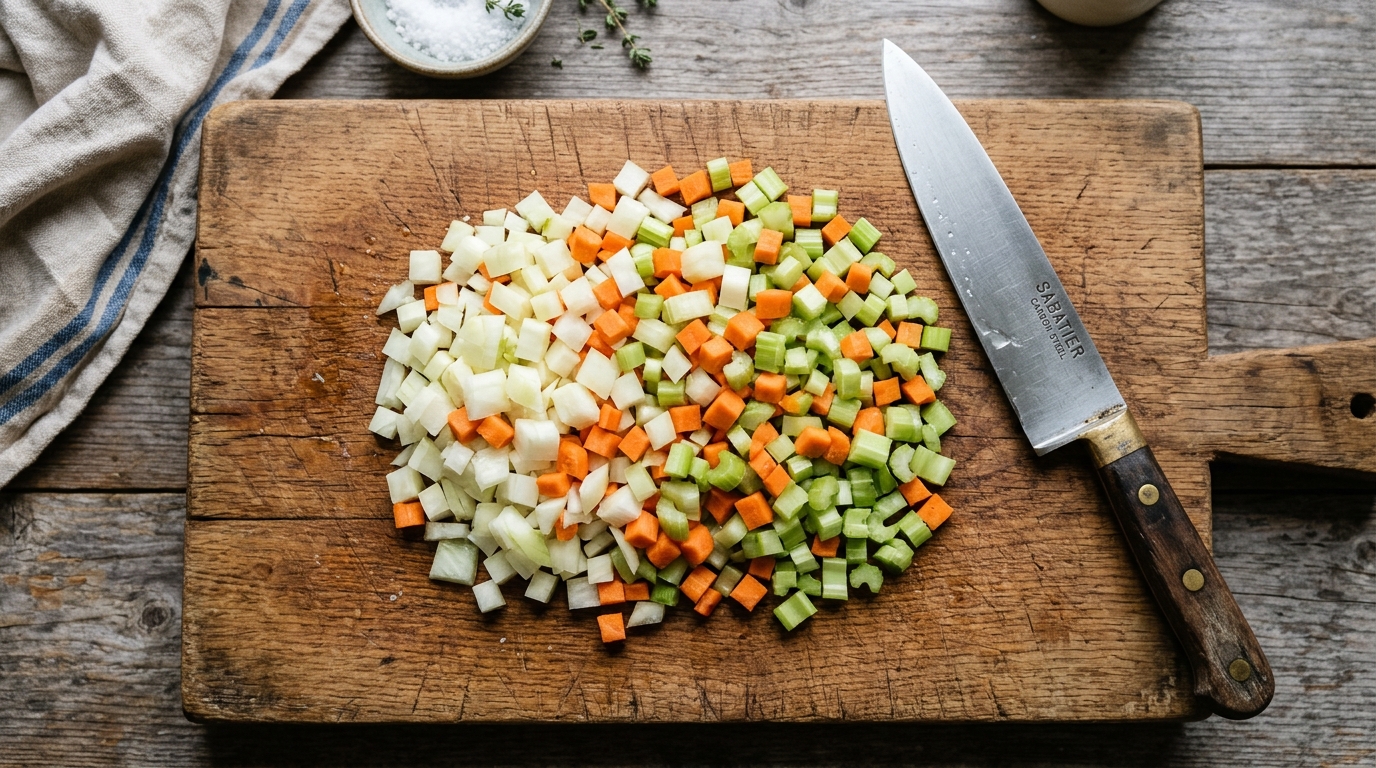
The aromatic backbone of classical French saucing and stock making: a harmonious 2:1:1 weight ratio of onions, carrots, and celery chopped into coarse 1.5–2 cm cubes. Because these aromatics simmer gently for hours to release their soluble sugars and essences into stocks, braises, and stews, precise symmetry is less critical than uniform size for even extraction.
6. Chiffonade (Fine Herb & Leaf Ribbons)
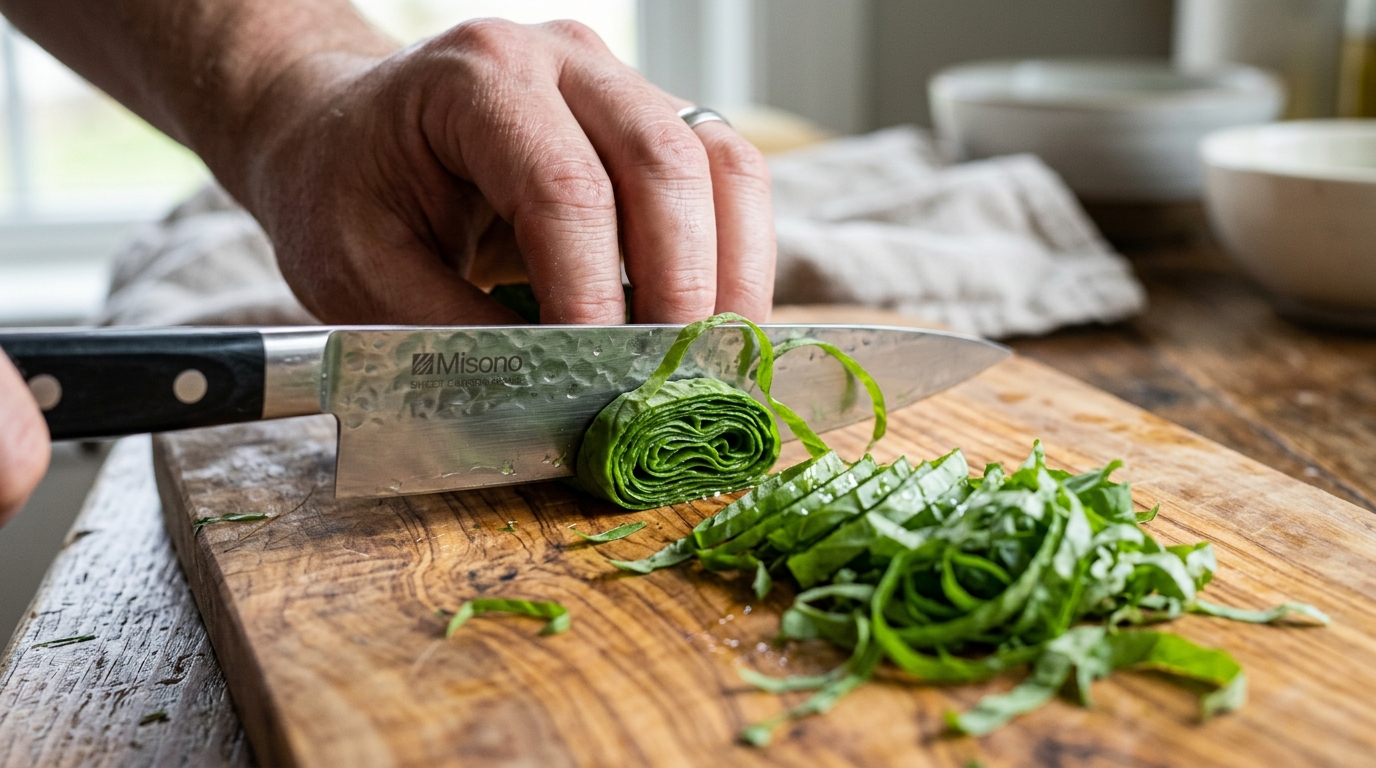
Designed specifically for delicate flat leafy greens and culinary herbs like basil, sage, spinach, and mint. Leaves are stacked flat, rolled tightly into a neat cylinder like a cigar, and then sliced paper-thin across with a razor-sharp blade. When gently fluffed with your fingertips, exquisite gossamer ribbons unravel without bruising the delicate cell walls or oxidizing essential herb oils.
7. Rondelle (Coin & Bias Rounds)
Round coin slices cut across cylindrical produce like carrots, zucchini, cucumbers, and leeks. Slicing at a diagonal angle (bias cut) elongates the surface area, promoting faster caramelization in hot pans and providing superior glaze adherence.
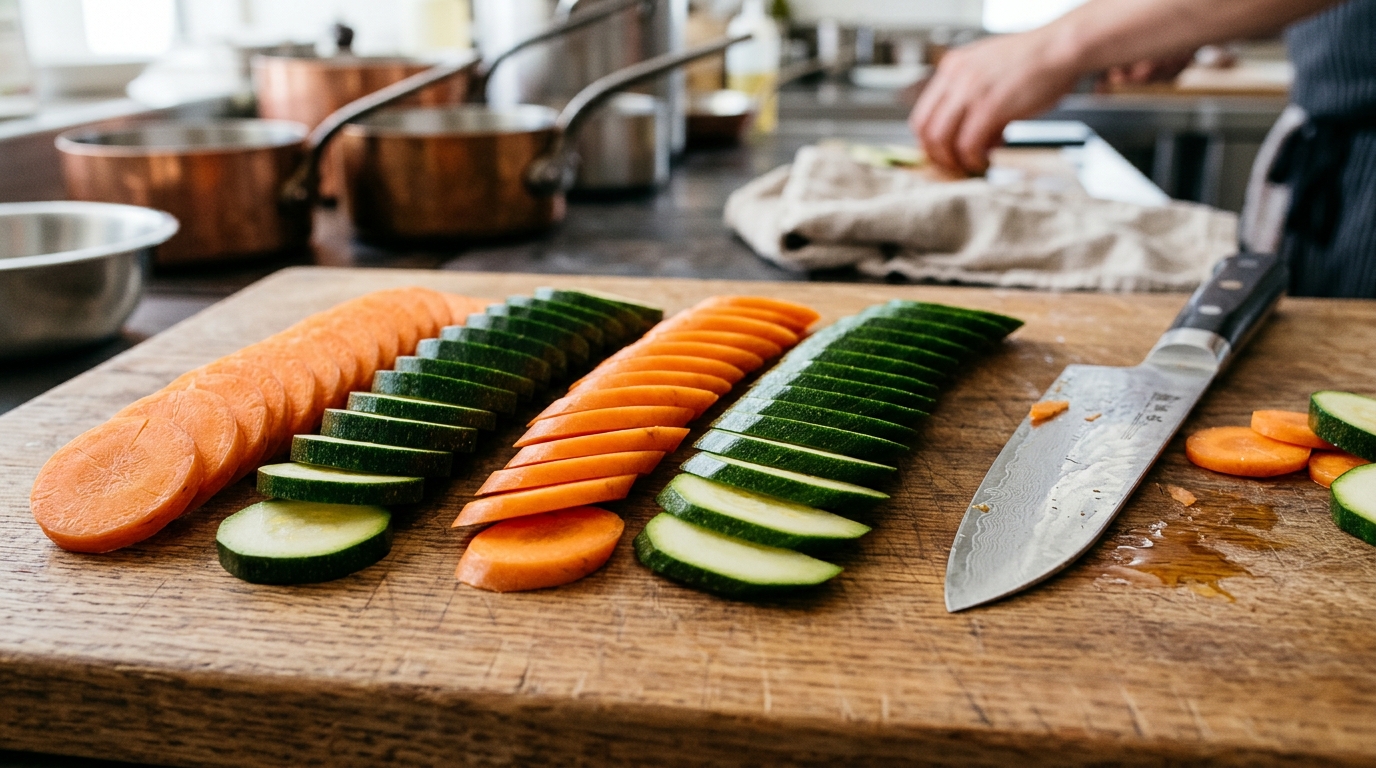
3. Why Precision Cutting Directly Dictates Culinary Flavor
- Even Heat Penetration: If vegetable pieces in a pan vary wildly in size, the small bits overcook into mush before the large chunks soften. Uniform knife work ensures every single morsel reaches optimum tenderness simultaneously.
- Cellular Integrity & Moisture Retention: A dull or improperly pressed blade crushes plant cell walls, weeping moisture onto the cutting board and releasing harsh sulfur fumes from onions. A sharp chef's knife glides through cleanly, sealing juices and sweet aromatic compounds inside the vegetable.
- Visual Plate Balance: Gastronomy is an art appreciated first with the eyes. Symmetrical, intentional knife cuts reflect culinary discipline, care, and professional quality.
4. The Chef's Knife Maintenance Rules
"A sharp chef's knife is a cook's safest and most trustworthy partner; a dull blade is an unpredictable hazard waiting to slip."
- Select the Right Board: Glass, ceramic, and marble cutting boards will instantly chip and dull fine steel edges. Always use high-quality wood (especially end-grain maple, walnut, or beech) or professional NSF-certified food-grade polyethylene boards.
- Honing vs. Sharpening: A honing steel does not remove metal; it realigns the microscopic teeth of the blade edge that bend during slicing. Hone at a 15–20 degree angle for 4 to 5 light strokes before prep sessions to keep cutting effortless.
- Keep Knives Away from Dishwashers: Harsh chemical detergents, abrasive spray jets, and extreme heat cycles degrade steel temper and warp handles. Always hand-wash with mild soapy water and dry immediately with a clean towel.
İyi Bir Yemek
Food Researcher & Writer
Reader Comments & Contributions
Be the first to share your thoughts on this post