
Kitchen Measurement Conversion Guide: How Many Grams in 1 Cup of Flour, Sugar, and Liquid?
How many grams is 1 cup of flour, sugar, oil, or milk? Complete weight-to-volume kitchen conversion chart with cups, Turkish tea glasses, and spoons.

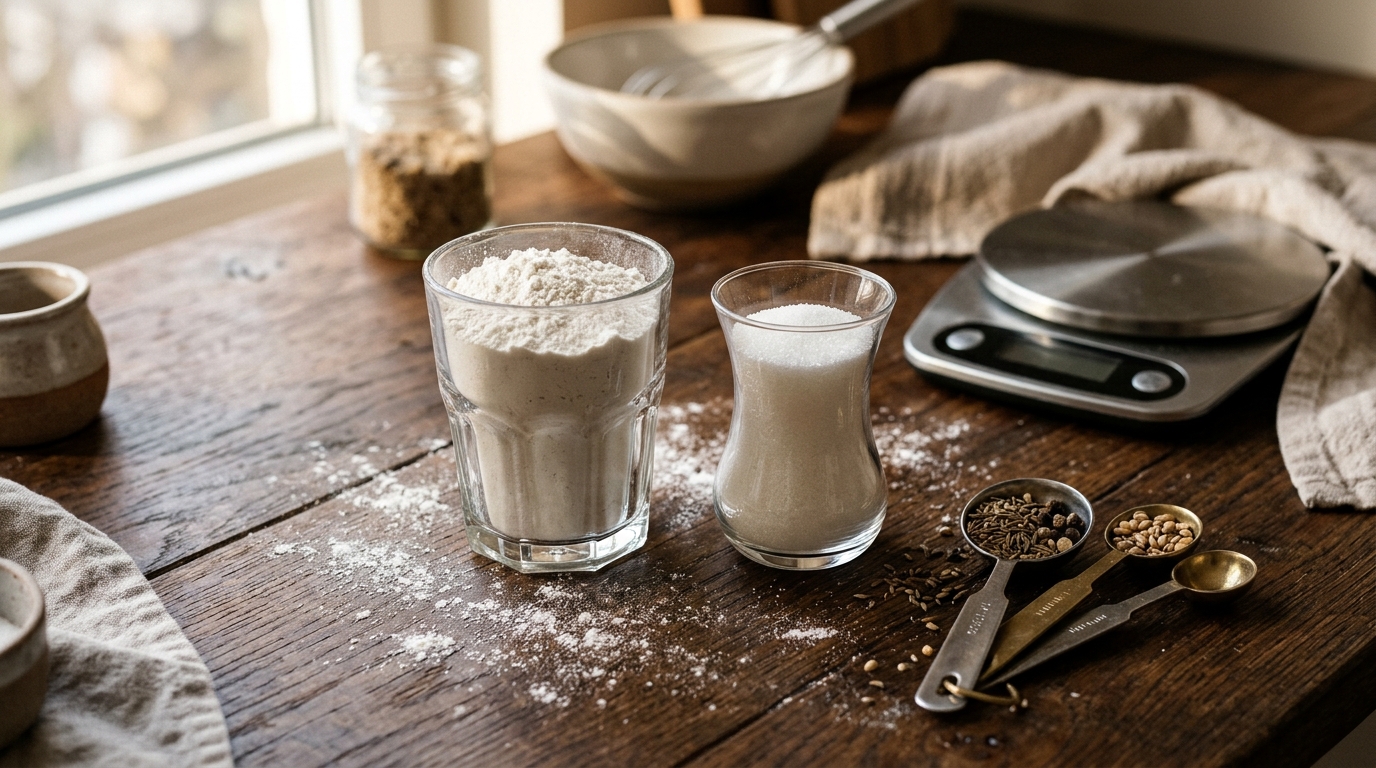
Have you ever followed a baking recipe step-by-step, only to end up with a dry cake, flat cookies, or soup that turned out way too thick? More often than not, the culprit isn't your oven or your cooking skills—it lies in the ambiguity of "1 cup" or "1 glass".
The most common pitfall in the kitchen is mistaking volume for weight. While the volume (milliliters) of a measuring cup or glass is fixed, the density of the ingredient you put into it drastically alters its actual weight on a scale.
For instance, the same standard 200 ml water glass (or a standard 240 ml US cup):
- Filled with water or milk weighs exactly 200 grams (240 g for US Cup).
- Filled with granulated sugar weighs approximately 190 grams (200 g for US Cup).
- Filled with all-purpose flour weighs only 125 – 130 grams (120 – 140 g for US Cup).
In this definitive guide, we have compiled the exact metric gram conversions for standard glasses, Turkish tea glasses, tablespoons, and teaspoons so you can cook and bake with chef-grade precision without guessing.
1. Standard Glass & Cup Measurements (200 ml Glass / 240 ml Cup)
In traditional Mediterranean and Turkish recipes, a "standard water glass" (su bardağı) holds 200 ml of liquid, while international American recipes specify a "US Cup" at 240 ml. Here is the ingredient-by-ingredient conversion chart:
| Ingredient | Standard Glass (200 ml) | US Cup (240 ml) | 1/2 Glass (100 ml) |
|---|---|---|---|
| Water / Milk / Sparkling Water | 200 g | 240 g | 100 g |
| Olive Oil / Vegetable Oil | 185 g | 218 g | 92 g |
| All-Purpose Flour (Sifted) | 125 – 130 g | 140 – 150 g | 65 g |
| Granulated Sugar | 190 – 200 g | 225 – 240 g | 100 g |
| Powdered / Confectioners' Sugar | 120 g | 140 g | 60 g |
| Rice / Bulgur / Red Lentils | 180 – 190 g | 220 g | 90 g |
| Semolina | 170 g | 200 g | 85 g |
| Cornstarch / Wheat Starch | 110 – 120 g | 130 g | 55 g |
| Cocoa Powder | 100 – 105 g | 120 g | 50 g |
| Greek / Plain Yogurt | 230 – 240 g | 280 g | 120 g |
| Rolled Oats | 90 – 100 g | 110 g | 45 g |
| Chopped Walnuts / Hazelnuts | 110 – 120 g | 140 g | 55 g |
| Chocolate Chips | 160 g | 190 g | 80 g |
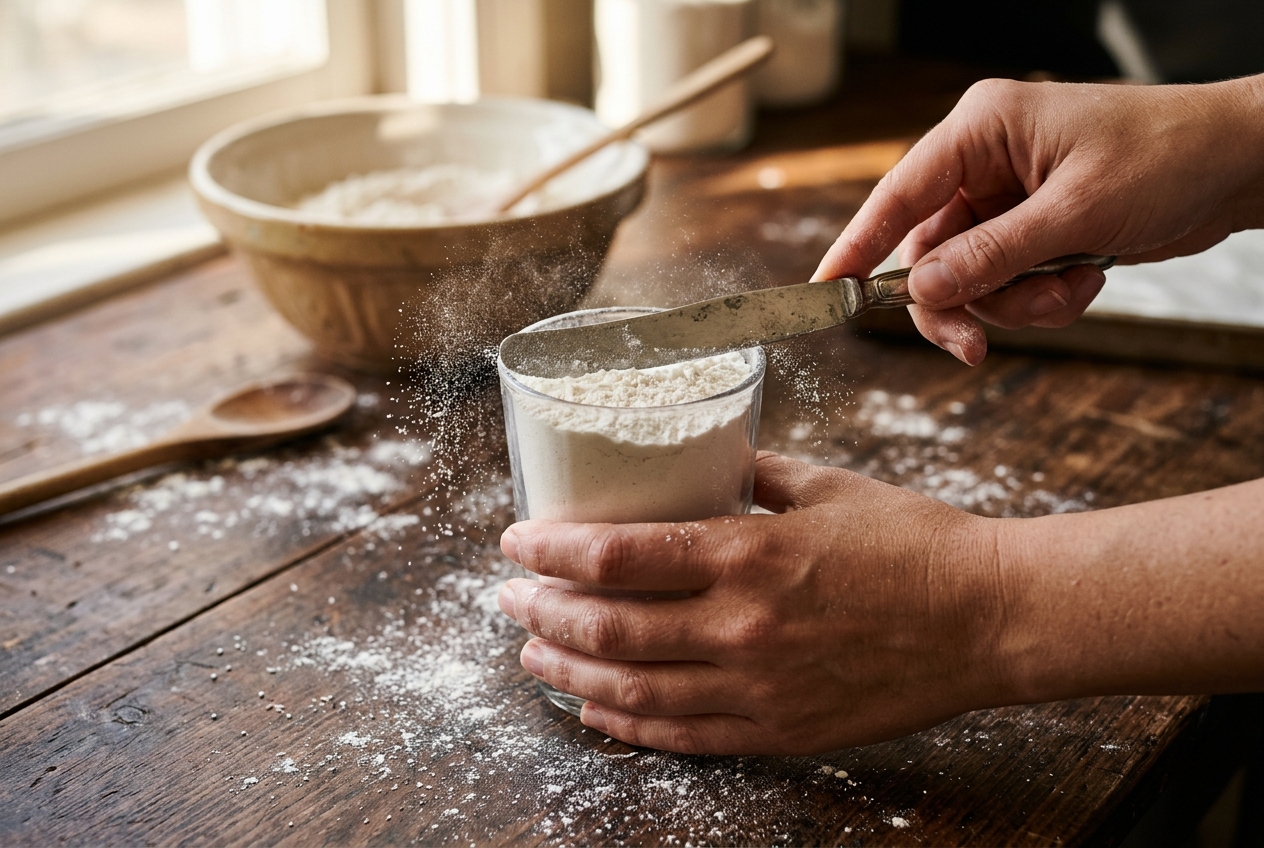
💡 Chef's Flour Tip (The Spoon and Level Technique): Scooping flour straight from the bag compresses it, causing up to 160-170 grams to pack into a single glass! This will make your baked goods dense and heavy. Instead, fluff the flour with a fork, spoon it gently into the cup, and sweep off the excess using the flat back of a butter knife.
2. Turkish Tea Glass Conversions (100 ml vs. 125 ml Ajda)
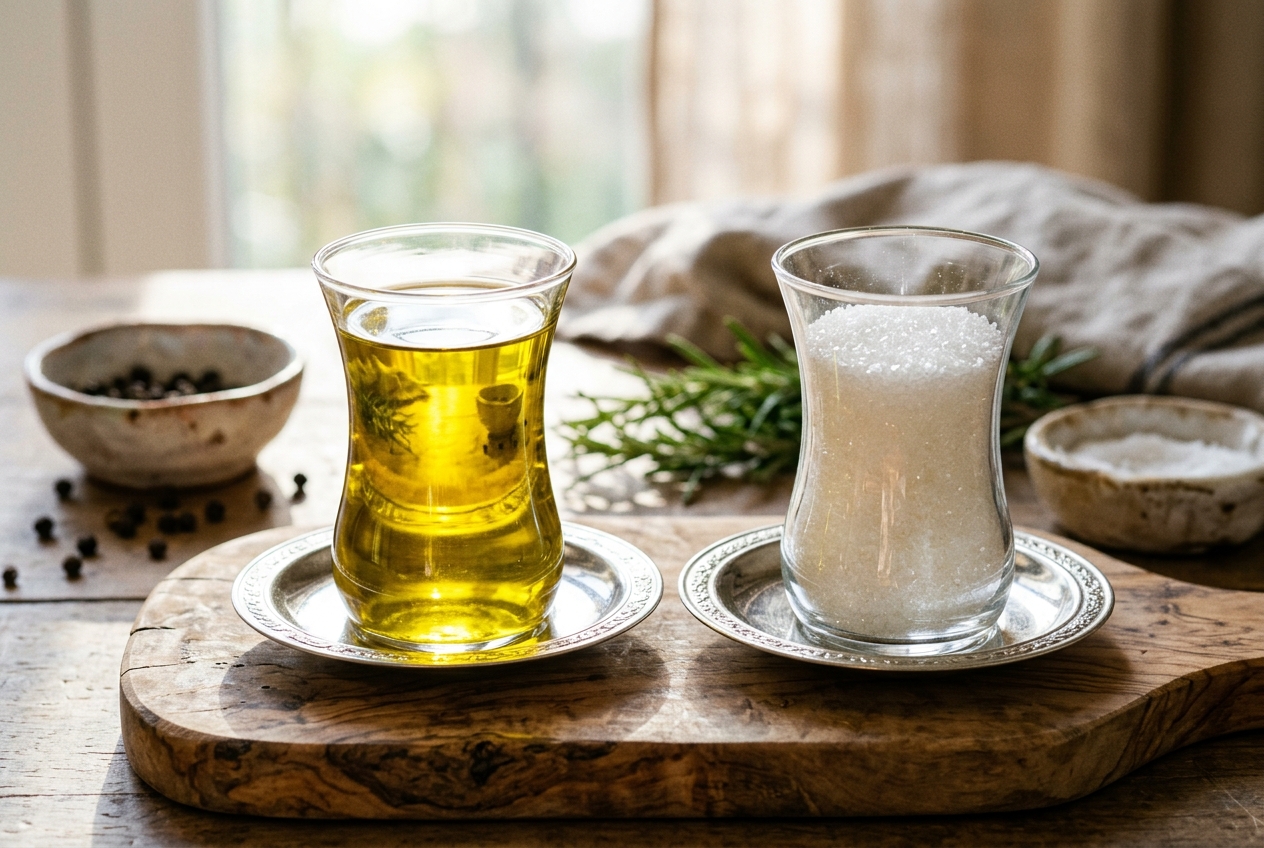
Traditional Mediterranean and Turkish households often measure with tea glasses. Classic thin-waist tea glasses hold 100 ml, while modern larger Ajda glasses hold 125 – 130 ml:
| Ingredient | Classic Tea Glass (100 ml) | Ajda Tea Glass (~125 ml) |
|---|---|---|
| Olive Oil / Water / Milk | 100 g (100 ml) | 125 g (125 ml) |
| Granulated Sugar | 95 g | 120 g |
| All-Purpose Flour | 65 g | 80 g |
| Powdered Sugar | 60 g | 75 g |
| Semolina / Rice | 85 – 90 g | 110 g |
| Chopped Nuts | 55 g | 70 g |
3. Tablespoon Conversions (Level vs. Heaping)
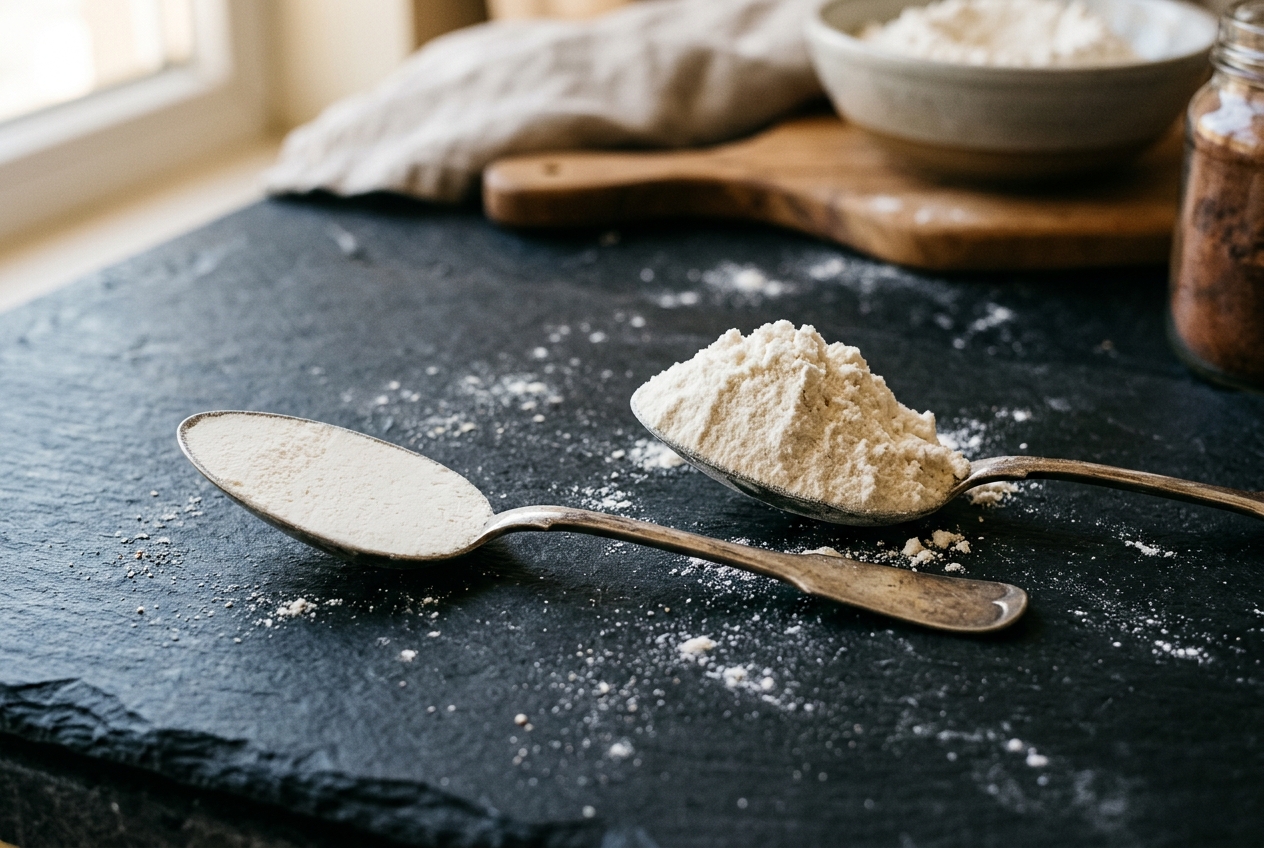
The difference between a "level" tablespoon and a "heaping" tablespoon can literally double the amount of ingredient you add!
| Ingredient | 1 Tablespoon (Level) | 1 Tablespoon (Heaping) |
|---|---|---|
| Water / Milk / Vinegar | 15 ml (15 g) | — (Liquids cannot be heaped) |
| Olive Oil / Vegetable Oil | 14 – 15 g | — |
| Butter / Margarine (Softened) | 15 g | 25 – 30 g |
| All-Purpose Flour | 10 – 12 g | 18 – 22 g |
| Granulated Sugar | 15 g | 22 – 25 g |
| Powdered Sugar | 10 g | 16 g |
| Yogurt | 20 g | 30 – 35 g |
| Tomato / Pepper Paste | 20 – 25 g | 35 – 40 g |
| Honey / Molasses | 20 – 22 g | 30 g |
| Cocoa Powder / Cornstarch | 10 g | 15 – 16 g |
4. Teaspoon, Dessert Spoon & Pinch Conversions
- 1 Dessert Spoon: 10 ml capacity (approx. 2 teaspoons or 1/2 tablespoon).
- Liquids: 10 ml (10 g)
- Sugar / Salt: 8 – 10 g
- Spices / Yeast: 5 – 6 g
- 1 Teaspoon: 5 ml capacity.
- Liquids: 5 ml (5 g)
- Salt / Sugar: 5 g
- Ground Spices (Black Pepper, Cinnamon, Ginger): 2.5 – 3 g
- Baking Powder / Baking Soda: 4 g
- 1 Pinch: What you hold between thumb and index finger. Averages 0.5 – 1 gram.
5. Commercial Baking Packets
Standard European/Mediterranean single-use culinary sachets:
- Baking Powder: 1 packet = 10 grams
- Vanilla Sugar: 1 packet = 5 grams
- Instant Dry Yeast: 1 packet = 10 grams
- Fresh Yeast Cake: 1 block = 42 grams
- Cooking Cream: 1 small carton = 200 ml (~200 grams)
- Petit Beurre Biscuits: 1 standard pack = 175 – 200 grams
✨ Never Guess Again: Smart Measurement Tooltips on GoodAFood!
To make cooking completely seamless, we built an interactive tool on iyibiryemek.com:
Whenever you browse a recipe on our platform, simply click or tap on any measurement tag like "2 sb", "1 tbsp", or "1 cup". An intelligent card instantly reveals the exact calculated weight in grams, milliliters, and tailored culinary advice for that specific ingredient. Even better, scaling the recipe servings dynamically recalculates all weights on the fly!
Even without a kitchen scale, perfection is now just a tap away. Happy cooking!
İyi Bir Yemek
Food Researcher & Writer
Reader Comments & Contributions
Be the first to share your thoughts on this post