
How to Use a Cooling Rack for Cookies, Cakes and Bread
Learn when to move cookies, cakes and bread to a wire rack, how to choose the grid size, and what to do when the undersides stay damp.

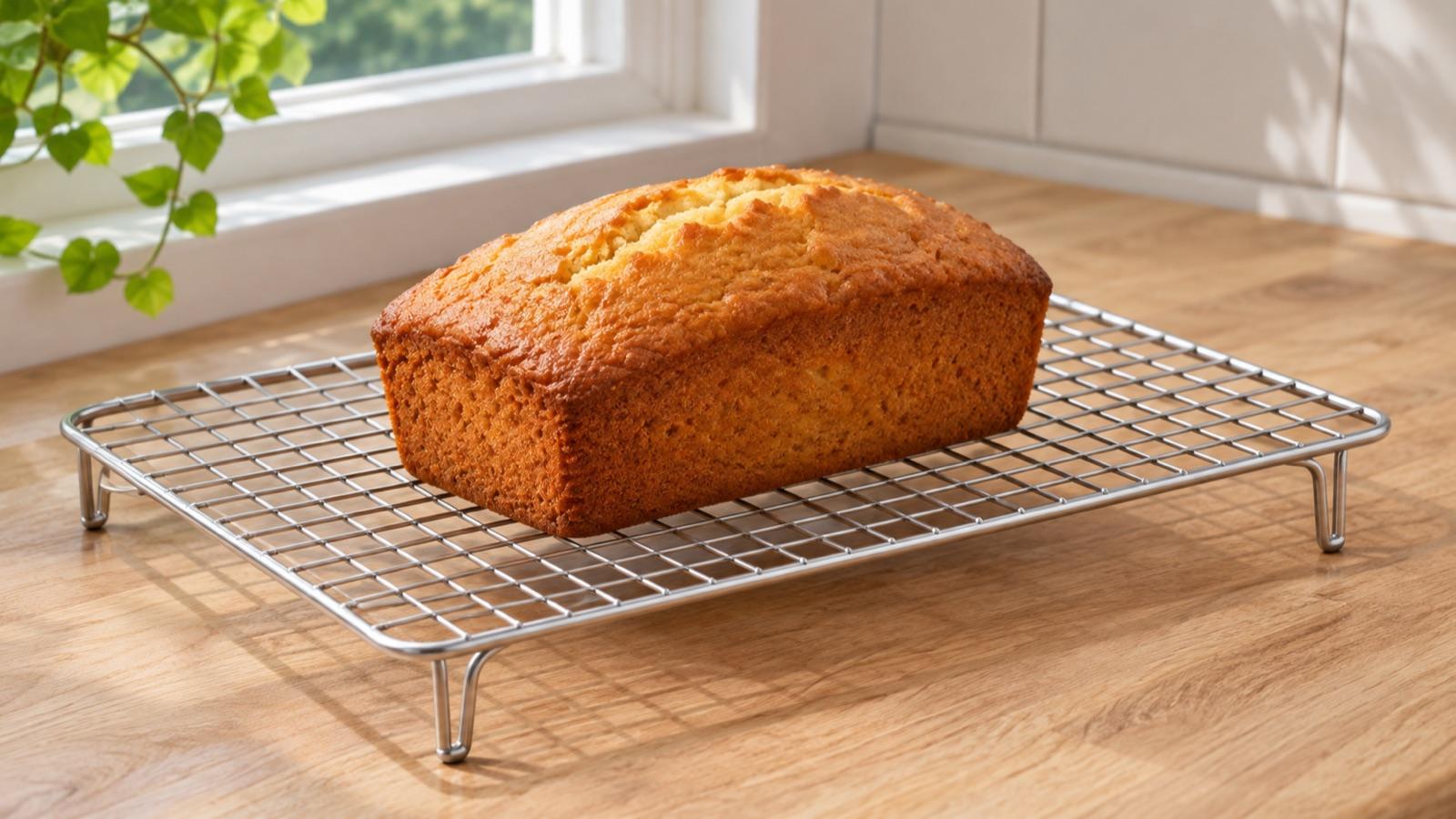
Move cookies, cakes and bread to a raised wire rack once they are firm enough to handle. Air can then reach the bottom, so the underside is less likely to soften from trapped moisture than on a hot tray or flat plate. The right moment to transfer depends on the bake and your recipe’s instructions for removing it from the pan.
Why a rack helps the underside stay dry
A hot bake releases moisture as it cools. A cookie sitting flat on a plate leaves little room for that moisture to escape underneath, especially near an edge you want to keep crisp. The rack raises the bake and lets air reach that surface. Taking it off the hot baking sheet also limits the extra browning that can happen on hot metal.
This works best when the bake rests directly on the rack. Leaving the baking paper underneath blocks direct airflow, and a rack lying flat on the counter will not provide the needed gap. Before opening the oven, set up a stable rack with space beneath it and put a separate trivet beside it for the hot pan.
Sources: Nordic Ware
When to take each bake out of its pan
Let cookies sit on the sheet as directed. The edges can look firm while the middle is still soft. Slide a thin spatula all the way underneath; if the cookie folds in the middle, give it a little longer. Let the empty baking sheet cool before adding the next batch so fresh dough does not start to spread on hot metal.
For a plain loaf cake, follow the resting time in the recipe, release the edges, support the pan as you turn it out and set the cake upright on the rack. Delicate cakes can have different rules; some foam cakes cool upside down in their pans. For a loaf of bread that should be unmoulded, cool it alone on the rack. A crust cool enough to touch does not mean the middle is ready to slice.
Sources: King Arthur Baking: Cookie Essentials · King Arthur Baking: Cake Guide
Compare two cookies from the same batch
Choose two similarly sized cookies from one sheet. Once you can lift them intact, place one directly on the rack and the other on a flat room-temperature plate. Leave both uncovered. Spread out the other cookies in one layer if they share the rack, as shown below. Stacking them would introduce another source of trapped moisture.
When both are at room temperature, look at their undersides, then break a piece from each edge. Dampness, stickiness and the way the edge snaps tell you more than the colour on top. With a cookie designed to stay soft, the difference may be subtle. When you repeat the comparison, change the cooling surface only; changing the dough or bake time makes the result harder to explain. For a fair comparison, avoid pairing a thick cookie with a thin one: the thicker middle may stay soft longer. Lift both at the same time with the same spatula. Check them as soon as they have cooled, before storage makes a difference.
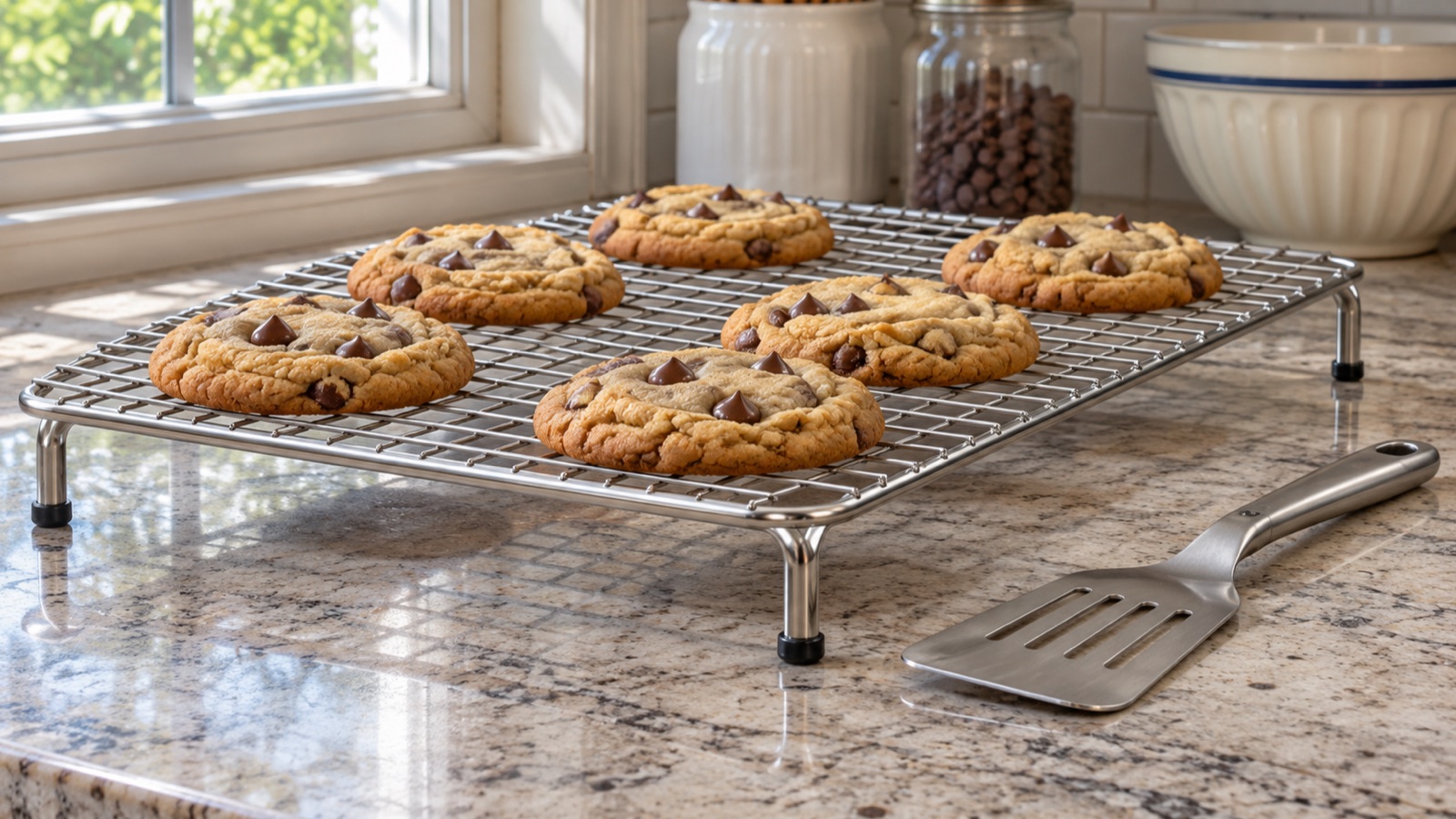
Choose the grid, frame and feet for the job
A close square grid supports small cookies better than widely spaced parallel wires. For a heavy loaf, look for a rigid frame and feet that do not flex, and allow enough room for the entire loaf. A large rack helps when you bake several batches. A stacking rack saves counter space if it leaves enough room to slide a spatula between levels.
Check that the feet sit flat and any coating is intact. For cooking in the oven, check the manufacturer’s explicit permission and temperature limit. Nordic Ware, for instance, rates one multipurpose rack to 260 °C; that figure applies to that model alone. For countertop cooling, stable feet and grid spacing suited to the bake matter most. A small rack works for a few cookies. If you pair it with a pan, check the inside dimensions: feet perched on sloped edges can shift as you turn out a loaf cake. Check the fit before baking and keep a clear gap beneath the wire.
Sources: Nordic Ware: Multi-Purpose Oven & Cooling Rack
Common mistakes and what to use instead
If bottoms stay damp, remove any paper and look for clear space under the rack. Stacking warm bakes or closing them in a container holds moisture in during cooling. If the wire leaves dents or cookies break, let the next batch firm up a little longer and use a tighter grid. If a loaf makes the rack flex, choose a larger, stronger support.
Without a cooling rack, you can raise a clean, food-contact oven shelf on stable, nonslip supports. Check the setup before adding weight. If the wires are too far apart for cookies, use a cool flat surface and move them as needed so the underside gets some air. Parchment versus silicone is a separate decision for baking; remove the liner when you move the bake to the rack.
İyi Bir Yemek
Food Researcher & Writer
Reader Comments & Contributions
Be the first to share your thoughts on this post