
How to Tell Ceylon Cinnamon from Cassia
Compare the cut ends of cinnamon sticks, read the label on ground cinnamon and try both types in apple compote and baked apples.

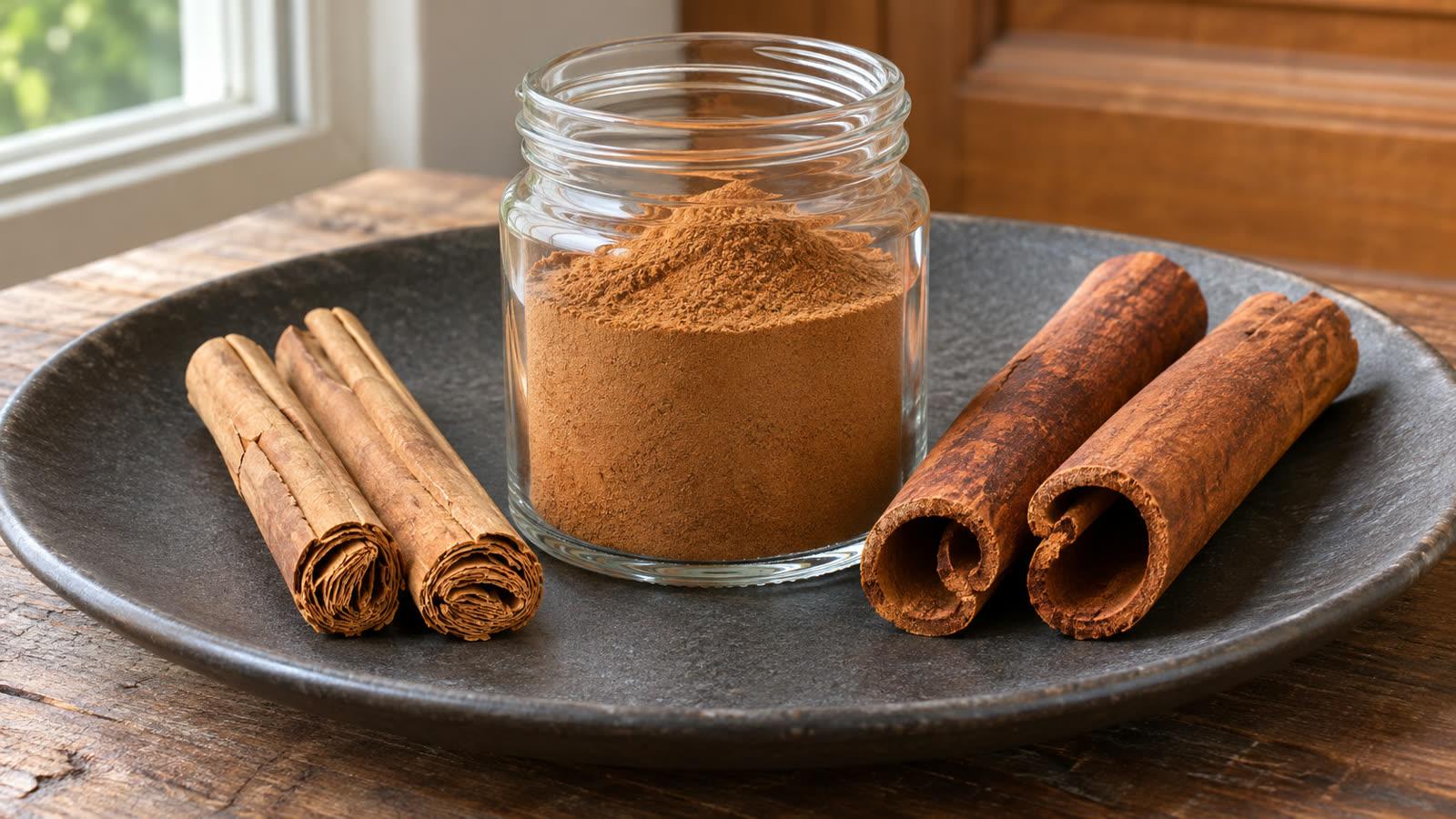
The cut end of a Ceylon cinnamon stick shows many thin layers nested together. Cassia usually has a thicker curl with a more open centre. Grinding removes that visible structure. If the species matters, look for a specific name on the packet and check the botanical name where available. Choose the form to suit the dish. A stick can be lifted out of compote, while ground cinnamon spreads over sliced apples before baking.
Look at the cut end of the stick
Hold a stick horizontally and turn its end towards the light. Ceylon cinnamon has tightly nested, paper-thin layers. Sri Lanka’s Department of Cinnamon Development describes how thin inner bark is fitted together to make the traditional quills. A piece of cassia may curl inwards from one or both edges. Its bark is thicker and the centre often has an open gap. Germany’s Federal Institute for Risk Assessment also uses the difference between these cross-sections to explain how to distinguish the sticks.
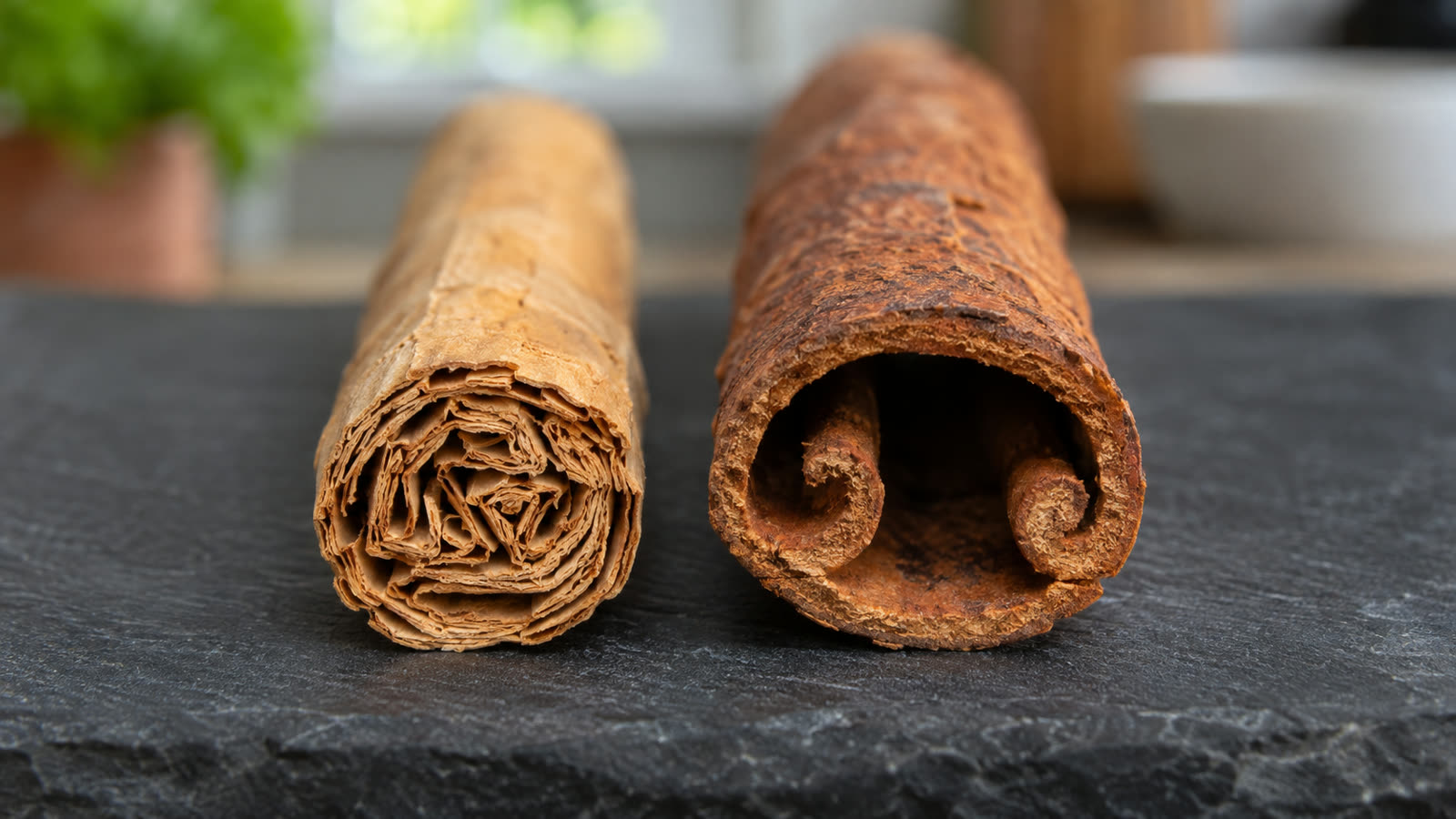
If a quill has split and all you have is a flat fragment, you may lose the visible arrangement of the layers. Look for another piece with a readable end or return to the packet. Pale tan and reddish brown can help when you put two sticks side by side, but lighting and variation between samples can mislead you. Brittleness alone will not identify a species either. Use the pictured ends as typical examples and check them alongside the product description.
BfR · Cinnamon Identification FAQ · Sri Lanka Department of Cinnamon Development · Post Harvest Technology
What to look for on ground cinnamon packaging
For Ceylon cinnamon, look for Cinnamomum verum. Cinnamomum zeylanicum is another name for the same species. Cinnamomum cassia means Chinese cassia. Some Indonesian and Vietnamese products come from other species that can be sold as part of the cassia group. If a packet says only “ground cinnamon”, a picture of fruit, a fine grind or a strong smell provides little basis for identifying the species. Ask for an explicit species name in the product information or from the producer if it matters to you.
At the shelf, read the product name and ingredients together. “Ceylon” on the front and Cinnamomum verum on the back are consistent with one another. If only a country of origin is given, consider it together with any species information on the packet. Trying to identify a powder by colour has little value. Laboratory authentication techniques have no straightforward kitchen equivalent. If a supplier cannot clarify what is in a packet, compare it with a product that declares the species.
Kew · Cinnamomum verum · Clean vs dirty labels · Ceylon cinnamon authenticity study
When to add a stick to compote
To compare two sticks, split a batch of apple compote between two small pans, with about 250 ml liquid in each. Add a small piece of Ceylon cinnamon to one and a similarly sized piece of cassia to the other. Keep both over low heat for the same length of time and smell them after 5 minutes. Put a spoonful on a plate, let it cool slightly and taste. Lift out the stick when the flavour suits you. If you want a stronger result, check again at short intervals.
Ceylon usually comes across as milder and cassia as sharper. The thickness, age and amount of the bark can all affect the result. Comparing pieces of similar size is a practical compote test even though they may differ in surface area or weight. If bark flakes remain in the pan, strain the liquid before serving. Counting the pieces as you put them in makes it easier to retrieve them at the end.
BfR · Ceylon and Cassia Cinnamon
How to distribute ground cinnamon on baked apples
Cut about 300 g apples into slices of equal thickness. Mix ¼ teaspoon ground cinnamon with a small share of the sugar from your recipe or a little oil, then toss the apples in it. Cinnamon poured in one spot can leave a few slices dark and heavily spiced while barely flavouring the rest. Next time, split the apples into equal batches and use small, equal measures of the two powders. Slices from the same apple and identical oven settings make the difference easier to assess.
Taste the samples while warm and record the type and amount you used. If you want more cinnamon flavour, increase the amount gradually in a later batch. Ready-made blends may contain sugar or other spices, which changes the comparison. To use a stick, try steeping it in a syrup served with the apples and remove it before serving. A stick placed directly among dry slices cannot distribute itself over their surfaces like powder.
Avoid common shopping and cooking mistakes
Compare like with like when smelling two samples. A freshly opened powder and a stick that has long been open reflect differences in storage and surface area as well as any difference in species. Smell two sticks or two powders in separate containers, then try a little of each in the same dish. If your first batch is too strong, reduce the amount next time. If the stick is still in the compote, remove it first and dilute the liquid with unspiced compote if needed.
Sticks and powders do not have a one-to-one measuring conversion. You can retrieve a stick from liquid, while powder disperses through the mixture. If you keep both forms, write the species and opening date on the jars. A short note makes it easier to buy a variety you liked and adjust the next batch. Leave a jar marked simply “cinnamon” when you cannot establish the species, then look for the botanical name when you shop again. When refilling a jar, avoid pouring a new batch over an old one. Keeping them separate makes it easier to notice which has lost aroma and repeat the comparison in the same dish. Mark the lid too if similar jars are easy to confuse.
İyi Bir Yemek
Food Researcher & Writer
Reader Comments & Contributions
Be the first to share your thoughts on this post