
How to Blanch Vegetables: From Boiling Water to an Ice Bath
Learn when to start timing, how much water to use and how to cool and drain blanched vegetables, with practical broccoli examples and clear purpose checks.

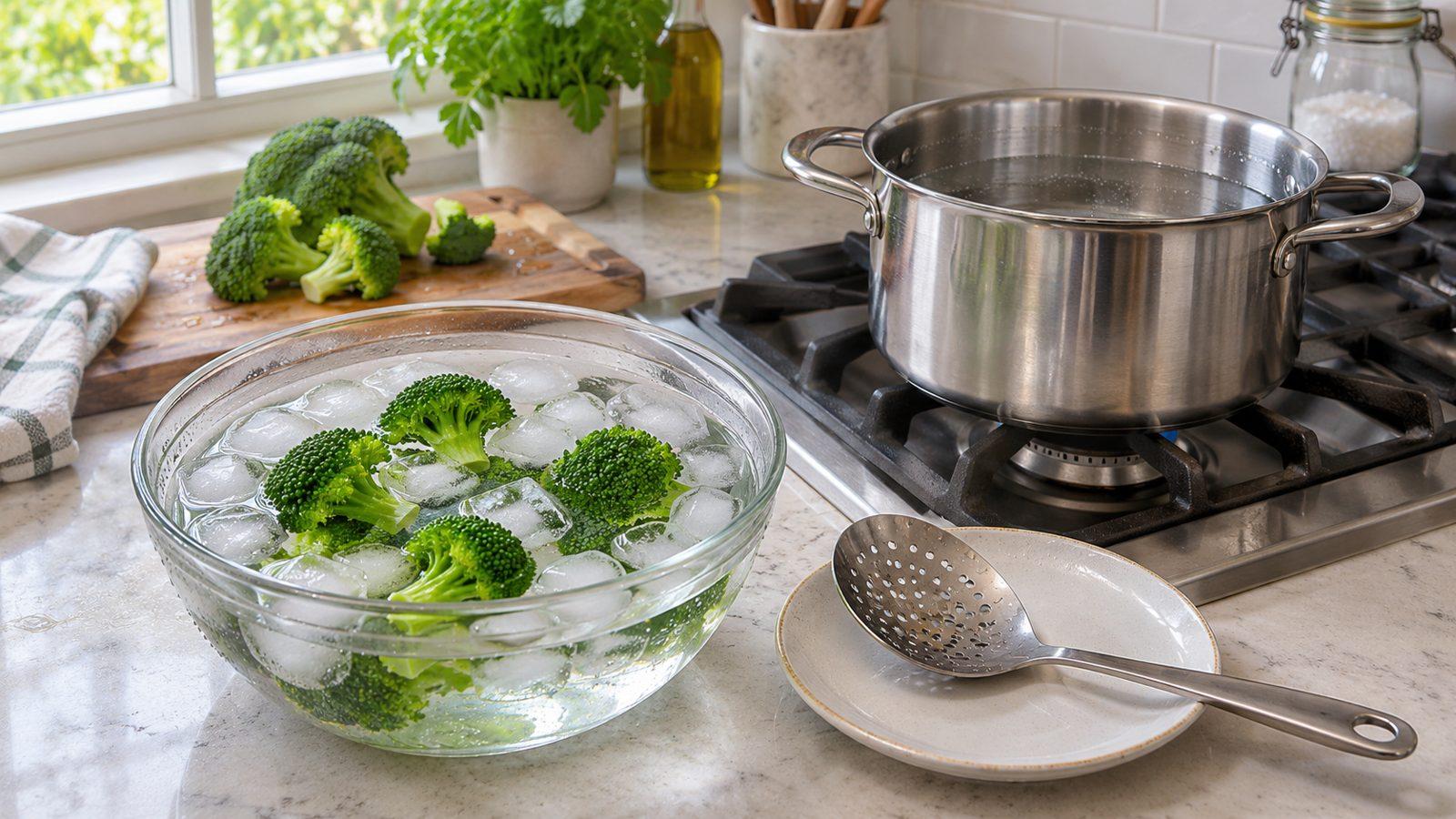
Blanching means briefly heating vegetables in boiling water or by an appropriate steam method, then cooling rapidly. The hot water is only part of the process: preparation, timing and cooling work together. You are controlling a preliminary cooking step, not making a purée. Separate the texture you want for dinner from the researched treatment used before freezing.
Choose the destination first
Broccoli for tonight’s salad and broccoli for the freezer call for different decisions. For immediate eating you judge the bite you want; for freezing follow a researched treatment for the vegetable and piece size. Bright green colour alone does not establish that freezer preparation is complete. Minnesota Extension explains that blanching inactivates enzymes affecting quality, while too little or too much treatment causes different problems. Start with sound, firm vegetables; the process cannot restore spoiled produce.
Think about the next dish before filling the pot. Salad florets should hold their shape, while vegetables for an omelet need surface water removed. For immediate hot service you may cook to the desired tenderness and use directly rather than cool and reheat. An ice bath is useful when you need to stop preparation for later use. Making that choice removes the temptation to impose the same timing on every green vegetable.
Minnesota Extension · Blanching vegetables
Set up hot and cold stations together
Wash vegetables and cut similar thicknesses; split thick stalks so they cook more evenly with florets. Set a roomy ice-water bowl, slotted spoon, timer and colander beside your work area before heating. Searching for ice during cooking makes the endpoint unpredictable. Keep the bowl away from the hot burner and allow a short, clear transfer route that avoids reaching through steam. Leave adequate headroom in the pot instead of filling a small pan to its rim.
NCHFP recommends about 3.8 litres of water per 450 g vegetables for water blanching. A small home example is 225 g prepared broccoli with about 2 litres water, a rounded reduction of that ratio. If the water does not return to boiling within 1 minute after adding vegetables, the batch is too large. Reduce the next batch instead of arbitrarily extending the time in an overcrowded pot that remains below a boil.
Start the timer at the right point
Lower vegetables carefully into vigorously boiling water. Wait for the boil to return, then start timing. For freezing broccoli, Michigan State specifies 3 minutes in water for pieces no wider than about 3.8 cm. Do not transfer that time to steam: Washington State lists 5 minutes for steam blanching broccoli. Piece size, heating method and intended use belong with every timing instruction, rather than being left out of a hurried kitchen note.
While learning, record piece size, batch weight, the return to boiling and the texture obtained. This is a suggestion for your own observations, not a claim that we conducted a test. Do not automatically apply broccoli timing to carrot slices or leafy greens. Judge salad texture separately and do not present freezer treatment as the universal serving texture. When switching to steam, keep the basket above the water and follow the specific method in the relevant guide.
Michigan State · Broccoli · Washington State · Broccoli
Cool promptly, then drain thoroughly
When time is up, transfer immediately into prepared ice water. Lukewarm water slows cooling; replenish melting ice as necessary. Michigan State’s broccoli guide specifies 3 minutes in ice water followed by thorough draining and patting dry. Do not settle for a cool exterior with warm pieces underneath. Use a broad bowl like the illustration so water can contact small florets, rather than balancing a crowded pile on top of ice.
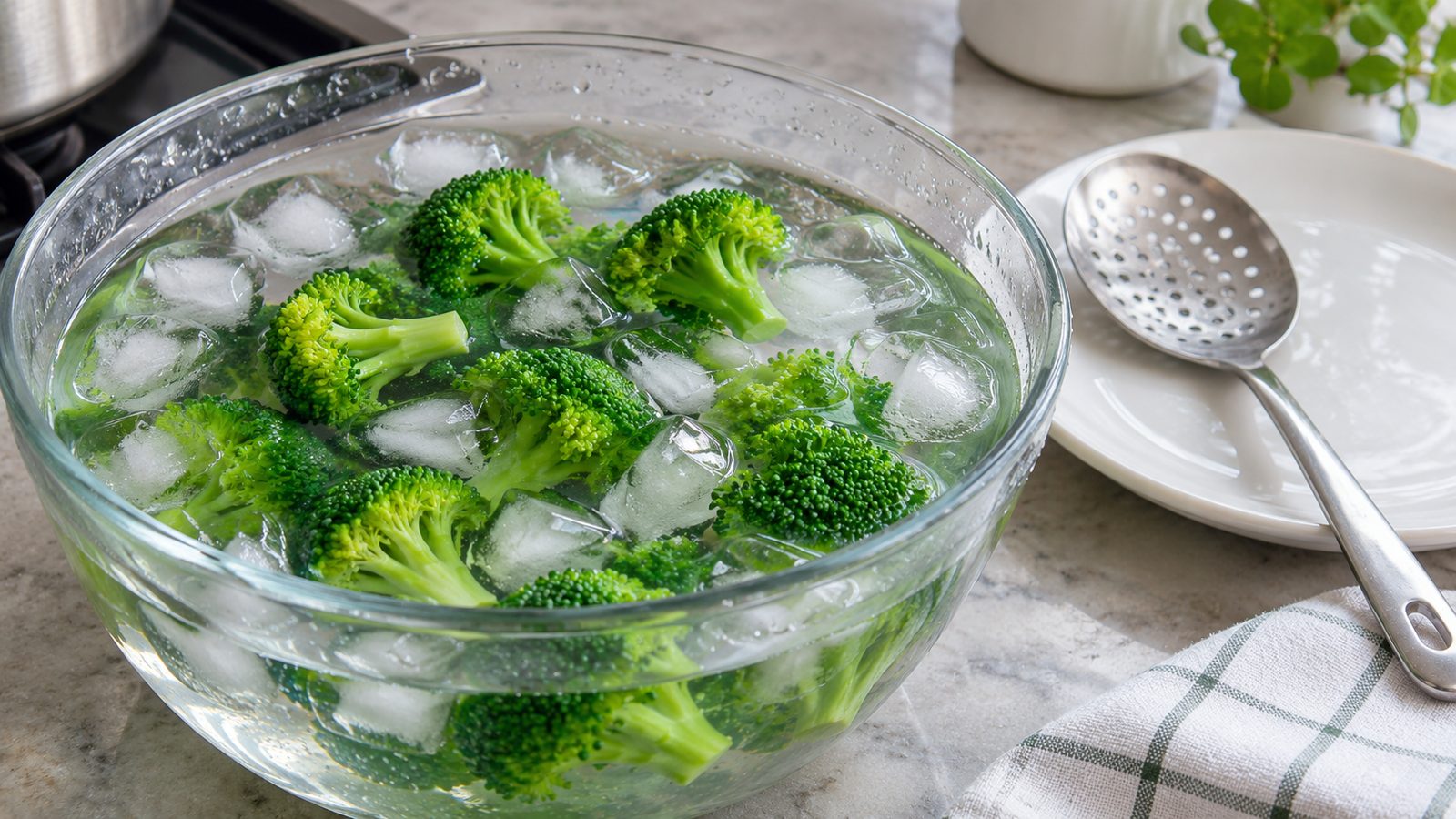
Do not leave cooled vegetables soaking indefinitely. Drain and gently remove surface moisture with a clean towel or paper. Water dripping into a yogurt salad thins the dressing; wet vegetables added to a hot pan cause splashing and steam. If freezing, Health Canada illustrates draining, freezing pieces separately on a tray and then moving them to a suitable freezer container. This reduces clumping; packing a hot or wet mound straight into a bag is a different process.
Michigan State · Broccoli · Health Canada · How to blanch vegetables
Read mistakes through texture and workflow
If vegetables became too soft, check size and timing next time: cold water cannot reverse cooked texture. If the boil returned slowly, reduce the batch. If the bath warmed immediately, prepare more space and fresh ice. Attractive colour does not prove that all steps were correct. Measurements and observation complement each other; do not add unknown substances just to reproduce the green of a photograph.
Compare the endpoints: drained, firm broccoli for a cold salad; precooked, surface-dried pieces for an omelet; and correctly timed, fully cooled vegetables for freezing. The final step changes with the destination. Is ice essential? A prepared ice bath offers rapid, predictable cooling at home; lukewarm tap water does not guarantee the same effect. Blanching is neither complete cooking nor sterilization. Apply the cooking and storage requirements of the dish that follows separately.
İyi Bir Yemek
Food Researcher & Writer
Reader Comments & Contributions
Be the first to share your thoughts on this post