
How Did Michelin Star Restaurants Come About?
How did Michelin star restaurants emerge? Discover this unique story full of origin, history and impressive details!

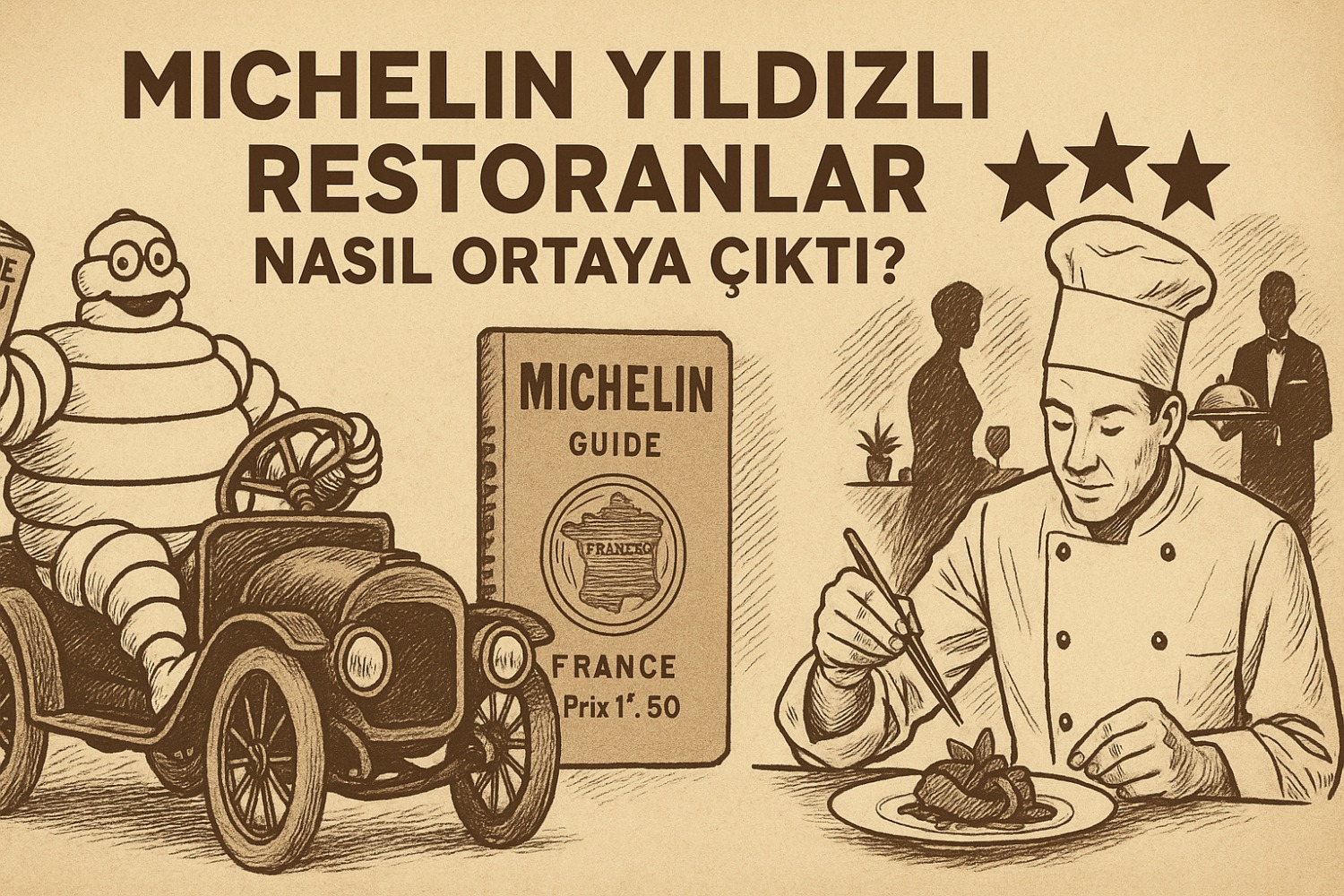
How Michelin Star Restaurants Emerged
Michelin star restaurants are one of the first authorities that come to mind when it comes to gastronomy around the world. But the origin of these prestigious stars is based on a point that is more interesting than most people can guess: tire manufacturing. Yes, Michelin stars were first created by the French tire manufacturer Michelin brothers. What is its purpose? To make more people drive.
In this article, we will explain in detail how Michelin stars were born, developed, evolved and why they are so effective today. We will also shed light on the effects of stars on restaurants and chefs, and their interesting and tragic consequences.
The Origin of the Michelin Star
The story of Michelin stars begins in the early 20th century, at a time when mobility was just becoming widespread in the automotive world. The surprising origin of this system lies in the French tire manufacturer Michelin company. The founders of the company, André and Édouard Michelin, wanted more people to drive cars, thus increasing tire consumption. In those years, there were only about 3000 cars in France.
For this reason, they decided to prepare a guide to encourage car owners to hit the road. This visionary step would start not only a commercial but also a cultural and gastronomic revolution.
The Impact of a Tire Brand on Gastronomy
André Michelin thought that the journey should be associated not only with tires or gasoline, but also with a enjoyable experience. So going from one place to another by car must have been an adventure in itself. Prepared with this idea in mind, the first Michelin Guide was published as a handbook listing auto repair shops, gas stations, maps, hotels and especially restaurants.
Over time, the restaurant sections of this guide began to stand out. Readers turned to this guide to find out where to eat the best food. This opened the door for the guide to become an authority in the field of gastronomy.
Why Was the Michelin Guide Created?
The purpose of the Michelin brothers was very clear: to encourage car owners to hit the road more often. The more you drive, the more tires wear out. The initial aim of the guide was to provide practical information and to recommend safe, quality places to drivers. However, over time, it was noticed that people showed special interest in the restaurant part.
Upon this awareness, Michelin decided to further develop the restaurant evaluation system. Thus, he became interested not only in tires but also in taste.
Travel Culture in France in the 1900s
20. In early 20th century France, journeys were generally short and local. Car owners were generally content to go to places close to the city. There were no highways, roads were narrow, gas stations were few. Therefore, the Michelin Guide was not just a guide, but a security tool.
French cuisine was on the rise during this period. People didn't just want to eat where they went, they also wanted to experience the best of the local cuisine. Michelin's guide met exactly this need. Over time, these journeys turned into gourmet trips.
When Did Michelin Stars Start Being Awarded?
The first Michelin stars were awarded in 1926. Originally, only one star was given, and this star was used to identify restaurants that served quality food. In 1931, the three-star system we know was implemented:
1 Star: A very good restaurant in its category
2 Stars: An excellent cuisine worth making a detour
3 Stars: An extraordinary cuisine worth a special journey
This system was a revolution in the history of gastronomy. Chefs were no longer just cooking, they were also practicing art.
The First Star System and Criteria
Although Michelin's stars seemed simple on the surface, they had very detailed criteria behind them. The following criteria were effective in awarding the stars:
Ingredient quality
Cooking techniques and mastery
Flavour balance and harmony
Creativity
Service quality and atmosphere
The interesting thing is that these criteria did not change over time. Inspectors still inspect restaurants based on the same five criteria. However, the method of implementation is kept very secret.
How Does the Evaluation System Work?

Michelin inspectors review restaurants completely anonymously is visiting. Only very limited people know who they are. They make a reservation, eat their food, and then write a detailed report without any notification to the restaurant.
In order for a restaurant to receive a star, more than one inspector must have the same quality experience. This reduces the subjectivity of the process. Inspectors may visit the same restaurant many times throughout the year. In the light of all this information, it is decided whether to give stars or not.
How to Choose Michelin Star Restaurants?
The way to become a Michelin star restaurant is through being discovered, not by applying. Yes, it is not possible to apply for a Michelin star. This is one of the most unique aspects of the system. In other words, Michelin inspectors find the restaurants themselves, experience them secretly, and then evaluate them.
The selection process of the restaurants works as follows:
Tips are collected from local gastronomy circles, journalists, bloggers, and even customers.
Inspectors inspect hundreds of restaurants throughout the year.
Only restaurants that show potential are revisited.
The last inspectors gather at the head office to vote for the decision.
This process literally takes place. It is based on the principles of independence and impartiality. That's why the Michelin star is considered the most reliable sign of the culinary world.
How Did the Michelin Guide Become Widespread?
The Michelin Guide, which was first published only in France, turned into an international authority over time. Since the 2000s, Michelin has expanded into markets outside Europe. Guides began to be prepared, especially in big cities that stand out with gastronomy:
2005: New York
2007: Tokyo (currently the city with the most Michelin star restaurants in the world)
2009: Hong Kong & Macau
2016: Seoul
2022: Istanbul (for the first time in Turkey)
This expansion shows that Michelin is not just a European phenomenon; On the contrary, it proves that it has become a global gastronomy authority.
Michelin Stars and Cultural Harmony
Michelin evaluates each country by taking its own gastronomy culture into consideration. So, a street food stall in Thailand can also receive stars; Also a "kaiseki" restaurant in Japan. What matters:
Mastery
Integrity of flavor
Ingredient quality
Consistency
For example, Jay Fai, who received a Michelin star in Bangkok, is a chef who cooks using a wok on the street, wearing glasses and a beret. This shows that the system is not elitist and also honors local excellence.
Michelin Star Cuisines of Asia
Asia has become the most remarkable region of the Michelin guide. Especially Japan and South Korea have caught up with Europe in the number of star restaurants. Some prominent countries:
Japan: Tokyo alone has more star restaurants than Paris and London combined.
South Korea: It brought originality to Asian cuisine with its Seoul guide.
Singapore & Hong Kong: As the point where Western and Eastern tastes meet, it has many 2 and 3-star restaurants.
China: Chinese cuisine from the world.
This shows that Michelin is a universal platform that honors not only French but also world cuisines.
Star Journey of Female Chefs
Although Michelin stars are mostly associated with male chefs, female chefs have made a strong breakthrough in recent years. Gender inequality is slowly being broken in the world of gastronomy. Here are some inspiring names:
Anne-Sophie Pic (France): One of the first female chefs with 3 Michelin stars.
Helena Rizzo (Brazil): One of the most successful female chefs in Latin America.
Nadia Santini (Italy): One of the rare female chefs who has maintained three stars for years.
The Michelin guide no longer only emphasizes quality, It started to reward diversity.
Criticisms of Michelin Stars
Like every system, Michelin stars are not immune from criticism. The most frequently expressed criticisms are:
Lack of Transparency: Since the identities of the inspectors are secret, it can be questioned whether the process is fair or not.
Emphasis on French Cuisine: Since the origin of the guide is France, some people claim that French techniques are prioritized.
Metropolitan Centrality: Successful restaurants in small settlements are less visible.
In the light of these criticisms, Michelin is now publishing guides in more cities and including street delicacies. Trying to be more fair and inclusive.
The Price of Being a Star Star
Winning a star is a reward, but sometimes it can also be a curse. After a restaurant receives stars:
It is forced to increase the number of its staff.
It invests in kitchen equipment.
It incurs high costs to keep the food quality at the highest level.
The stress on chefs and employees increases.
For this reason, some restaurants do not want to receive stars. There are also businesses that say, with a simpler understanding, "customer satisfaction is enough." Because being a star is as difficult as earning it and as exhausting as protecting it.
Chiefs Who Give Back the Stars
Although Michelin stars are considered a symbol of prestige and success, for some chefs this is the weight of the burden. may become unacceptable. For this reason, some famous chefs in history chose to give back their stars voluntarily.
One of the most well-known examples of this was France's legendary chef Sébastien Bras. Due to the pressure on his three-star restaurant, he made the following statement to Michelin in 2017:
"I don't want to be under constant surveillance anymore. I want to cook and create freely."
Again, three-star chef Marc Veyrat took Michelin to court after his star was dropped. He argued that the lost star damaged his reputation and negatively affected the spirit of his restaurant.
These situations show us that; The Michelin star has become not only an award, but also a symbol of high expectations.
Sustainability and Michelin
In recent years, the Michelin guide has begun to focus not only on taste and technique, but also on environmental and social responsibilities. In this context, in 2020, Michelin launched the "Green Star" application.
Green Star is given to restaurants that meet the following criteria:
Use of local and seasonal products
Waste reduction policies
Organic and sustainable agriculture supports
Energy efficiency and reduction of carbon footprint
This step is Michelin's not only gastronomic, but also ethical It shows that he also takes on the leadership role. Kitchens of the future are now evaluated not only by what they cook, but also by how they cook.
Michelin Stars and COVID-19
The pandemic period has literally been a test for Michelin star restaurants. While restaurants around the world were closing, some star-rated venues struggled to survive.
In particular:
Finely tuned service systems were disrupted.
International inspector visits stopped.
Star-rated restaurants had to switch to takeaway service (which was incompatible with the system).
In 2021, Michelin relaxed its evaluation system and gave restaurants more time. In some countries, stars were frozen and evaluations were postponed to 2022. This flexibility showed that the guide could be not only strict, but also sensitive and adaptive.
Michelin Star Restaurants in Turkey
The news that the gastronomy world had been waiting for a long time finally came in 2022: Istanbul was included in the Michelin guide. With this development, Turkey's first Michelin star restaurants were announced.
The first star. Among the restaurants that received the following were:
Mikla (Modern Anatolian cuisine)
Neolokal (Sustainable Turkish cuisine)
Araka
Nicole
TURK Fatih Tutak (the first Turkish restaurant to receive two stars)
This development brought Turkish gastronomy to the international stage. It was an important step symbolizing his exit. In addition, these restaurants, where Anatolian flavors are presented with refined interpretations, have begun to represent Turkey's rich culinary heritage on a global level.
Myths About Michelin Stars
There are many myths and false beliefs around Michelin stars. Here are some of the most common ones:
Inspectors always wear suits: No. To maintain confidentiality, investigators dress very casually, sometimes even wearing backpacks.
Once a star is given, it's permanent: False. Stars are re-evaluated every year.
Only luxury restaurants can get it: Not anymore. In Thailand, even a street food stall was given a star.
The chef gets stars, not the restaurant: Wrong again. The star is for the restaurant; if the chef moves to another place, the star will not be transferred automatically.
These rumors continue to feed the mysterious aura around Michelin stars.
Michelin Stars in Popular Culture
Michelin stars have found a wide place not only in the world of gastronomy but also in popular culture. Here are some remarkable examples:
Ratatouille (Pixar): A rat chef who owns a Michelin-starred restaurant introduced the process of getting stars with a cartoon.
The Menu (2022): A cinematic criticism dealing with the dark sides of star obsession.
Chef's Table (Netflix): A documentary about the lives and culinary philosophies of star chefs. series.
These productions introduced the world of Michelin to the masses and contributed to fine dining being seen as a lifestyle.
Stars and Digital Transformation
Today, social media has the power to change the fate of a restaurant. Instagram, in particular, poses both an advantage and a threat in the fine dining world:
Beautifully presented plates can go viral.
Social media likes can be as effective as a star.
Sometimes the goal is to look photogenic rather than customer satisfaction.
In order to keep up with this transformation, Michelin is now present in the digital world by publishing digital guides and mobile applications. However, the most trusted reference remains a starred page.
Michelin Star Restaurants Experience
Going to a Michelin star restaurant is not just a dinner; It is a sensory journey in itself.
As a customer, you expect:
A perfect welcome
Carefully selected plate presentations
Timed service flow
Creative touches that are the chef's signature
Experiences like these make you understand why stars are talked about so much and how magical memories can be created with a meal.
Michelin Maps for Travel Lovers
For food-loving travelers, Michelin star restaurants are route markers. Some travelers plan their holidays around these restaurants. At this point, Michelin offers great resources for users:
Mobile applications
City-based guidebooks
Possibility to filter by categories
Thanks to these resources, searching for a Michelin-starred restaurant becomes as exciting as a treasure hunt.
Frequently Asked Questions
How are Michelin stars awarded?
Suddenly made by undercover inspectors. It is awarded as a result of many visits and in line with certain quality criteria.
Is it possible to apply for a Michelin star?
No. Application is not possible. The guide determines and reviews the restaurants himself.
Are the stars permanent?
No. It is re-evaluated every year. If the quality decreases, stars can be received.
How many Michelin star restaurants are there in Turkey?
As of 2022, 5 restaurants in Istanbul received stars. This number increased to 14 in 2025.
What is a green Michelin star?
It is an environmentally friendly star type given to restaurants that are rewarded according to sustainability criteria.
What does a restaurant that loses a star do?
Reputation may be damaged and it may lose customers. However, these restaurants may be involved in the process to gain stars again.
Conclusion
Michelin star restaurants are not only for the food; It is a reflection of passion, mastery, dedication and culture. This interesting story, which started as a tire company, has today turned into a system that determines the direction of world gastronomy.
Michelin stars offer a universal language of quality that rewards both cuisines and creative visions. It's not just food; It is an experience, an art, a way of life.
İyi Bir Yemek
Food Researcher & Writer
Reader Comments & Contributions
Be the first to share your thoughts on this post