
Cooking Dried Pasta: Water, Lids and Stirring
Manage water, pot size, lids, stirring and sauce when cooking dried pasta. A practical guide with a two-person example and texture checks.

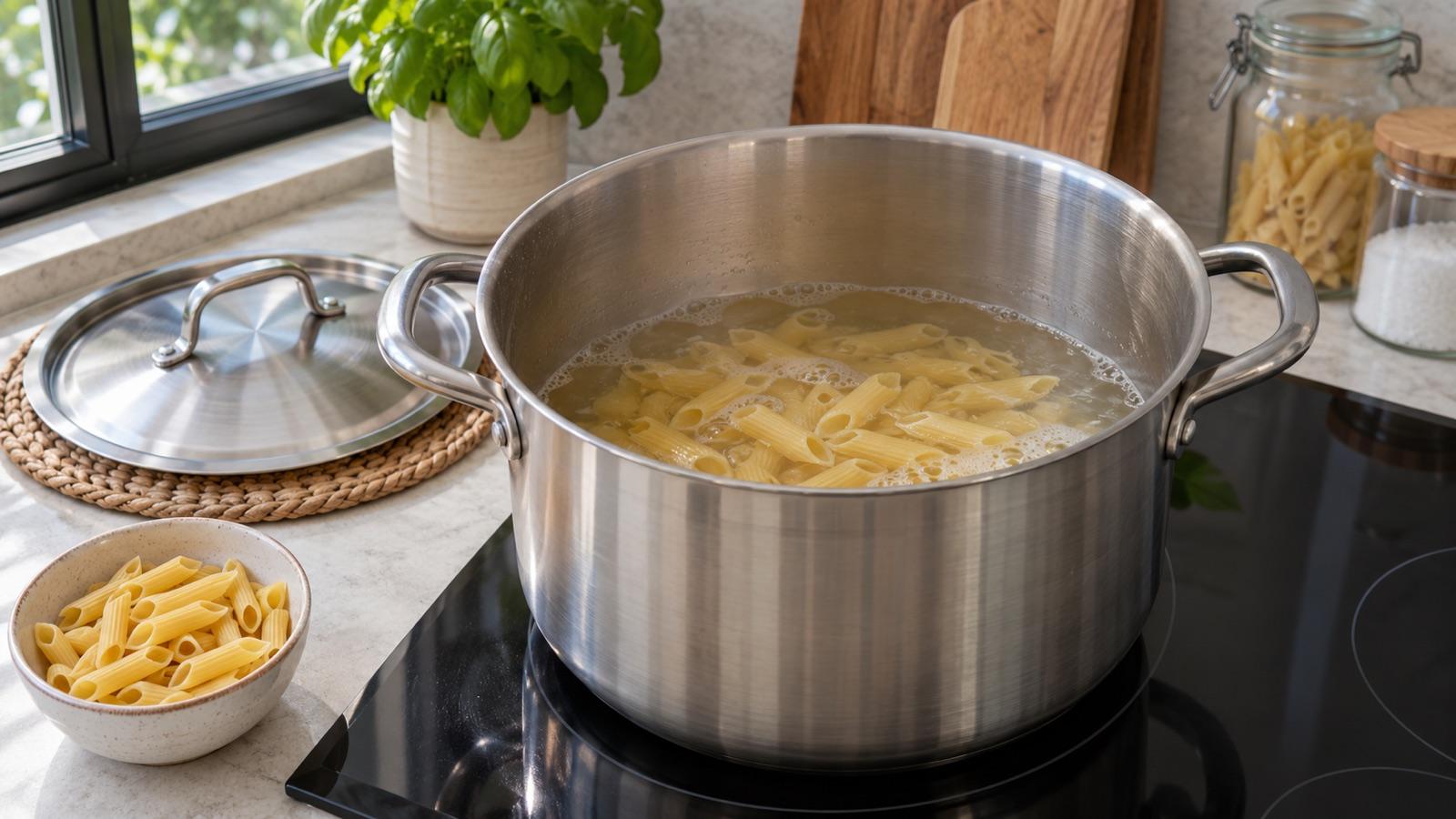
Add dried pasta to boiling water, stir immediately and leave the lid off while monitoring the boil. Use the time on the packet as a starting point, then check the texture of a piece before deciding it is ready. Water quantity, pot size and having the sauce ready all matter. This guide covers plain dried durum-wheat pasta; fresh pasta, filled pasta and products made from other flours need their own instructions.
Match the water quantity to the pot
For a two-person example, start with 200 g dried penne, about 2 litres of water and a pot with a capacity of at least 4 litres. This is a practical starting setup, not a compulsory ratio for every product. Do not fill the pot to the rim: allow room for the pasta and the movement of boiling water. Follow any different method on the packet. When cooking a larger quantity, check that the pot can accommodate it rather than simply adding more water.
Before switching on the heat, set out a colander, a long-handled spoon, a timer and a small heatproof jug with a handle. Have the sauce ready so the pasta will not have to wait. Penne packed tightly in a narrow pot behaves differently from penne with room to move; pieces that remain crowded when stirred can indicate an overfilled pot. For spaghetti, do not force the dry strands down. Let the submerged ends soften, then gently ease the rest into the water.
Use the lid differently before and after adding pasta
You can cover the water while bringing it to the boil. When opening the lid to add pasta, direct steam away from yourself and keep your face back. Adding pasta may briefly reduce the bubbling. Adjust the heat to restore a steady boil, without assuming that the highest setting is necessary. In this active cooking method, leave the lid off so you can see and control any rise in the liquid.
If foam rises, reduce the heat, watch the pot and stir gently. Adding more oil is not the answer to an overcrowded pot. If a narrow pan repeatedly approaches overflowing, use a larger one or a smaller batch next time. Passive cooking with the heat switched off and a lid in place is a separate method; do not borrow its timings for this open-pot approach. Turning down an electric hob does not cool the surface instantly, so keep watching the water.
Health and Wellbeing Queensland · Pasta
Plan the first stir and the texture check
Stir gently as soon as the pasta goes in to separate the pieces, then stir occasionally, reaching the base of the pot. Pay particular attention during the first few minutes. There is no need to whisk vigorously: separate long strands without tangling them and move short shapes gently from the bottom. Oil in the water cannot replace that action. Barilla recommends stirring to manage sticking and omitting oil from the boiling water for pasta served with hot sauce.
Set a timer using the packet instructions. A minute or two before the suggested finish, take out a piece, let it cool slightly and taste it. A soft exterior with a distinctly dry, hard centre is not ready; a pleasantly firm bite is different from a raw middle. Even different shapes from the same brand can require different times. Account for any further cooking in the sauce, but do not automatically subtract two minutes from every product. Note the packet, quantity and result to make the next batch easier to judge.
Reserve water before draining, then finish in sauce
Before draining, carefully reserve about 150 ml cooking water in the heatproof handled jug. You do not need to use it all. For example, after transferring penne to a pan of tomato sauce, add one tablespoon of water, stir and assess how the sauce spreads before adding more. Barilla explains that starch released into the water helps the sauce cling to the pasta. If the sauce is already watery, assess its consistency before adding more liquid.
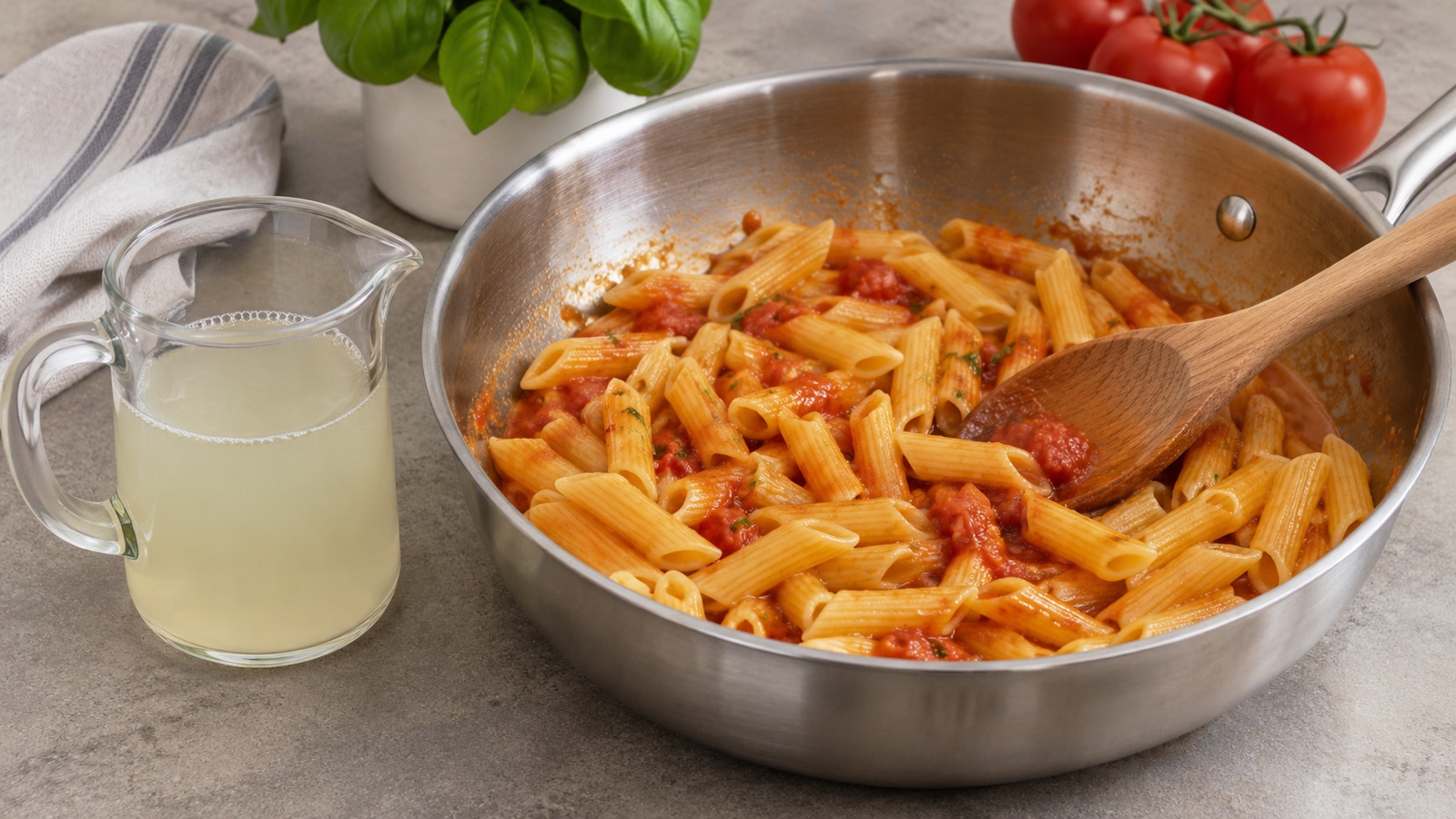
For pasta served hot with sauce, do not rinse it under the tap after draining: transfer it to the ready sauce while retaining the surface starch. The photograph illustrates small additions of reserved water; it is not a complete sauce recipe or a measurement of starch concentration. Place the colander securely in the sink, pour away from yourself and watch out for steam. If the full pot would be too heavy to handle safely, plan a smaller batch from the outset. Arrange the serving sequence rather than leaving hot pasta waiting in the colander.
Diagnose the result and respect the scope
If pieces stick together, review the first stir, pot capacity and time spent waiting after draining. Oil will not restore the texture of pasta that has already gone soft and broken apart: taste earlier next time. If sauce sits separately on the plate, gently mix pasta and sauce in the pan and assess small additions of reserved water. Allow for salty cheese or concentrated sauce when seasoning the cooking water rather than applying one universal spoonful-of-salt rule.
This sequence is for plain dried pasta served hot. Cold pasta salad, small pasta cooked in soup, lasagne sheets and filled pasta need their own recipes. In particular, do not subject filled pasta to the vigorous boiling and stirring that it may not tolerate; the penne example is not its instruction sheet. Storing leftovers is outside this guide, and cooking times are not storage limits. Finish with three checks: is the texture right, does the sauce coat the pasta, and is everything ready to serve?
Health and Wellbeing Queensland · Pasta
Read the gentle-simmer guide to recognise different levels of bubbling.
İyi Bir Yemek
Food Researcher & Writer
Reader Comments & Contributions
Be the first to share your thoughts on this post