
Cold, Softened and Melted Butter: What Changes in the Dough?
Understand cold, softened and melted butter in dough: texture cues, creaming, layers, spreading and a controlled comparison in your kitchen.

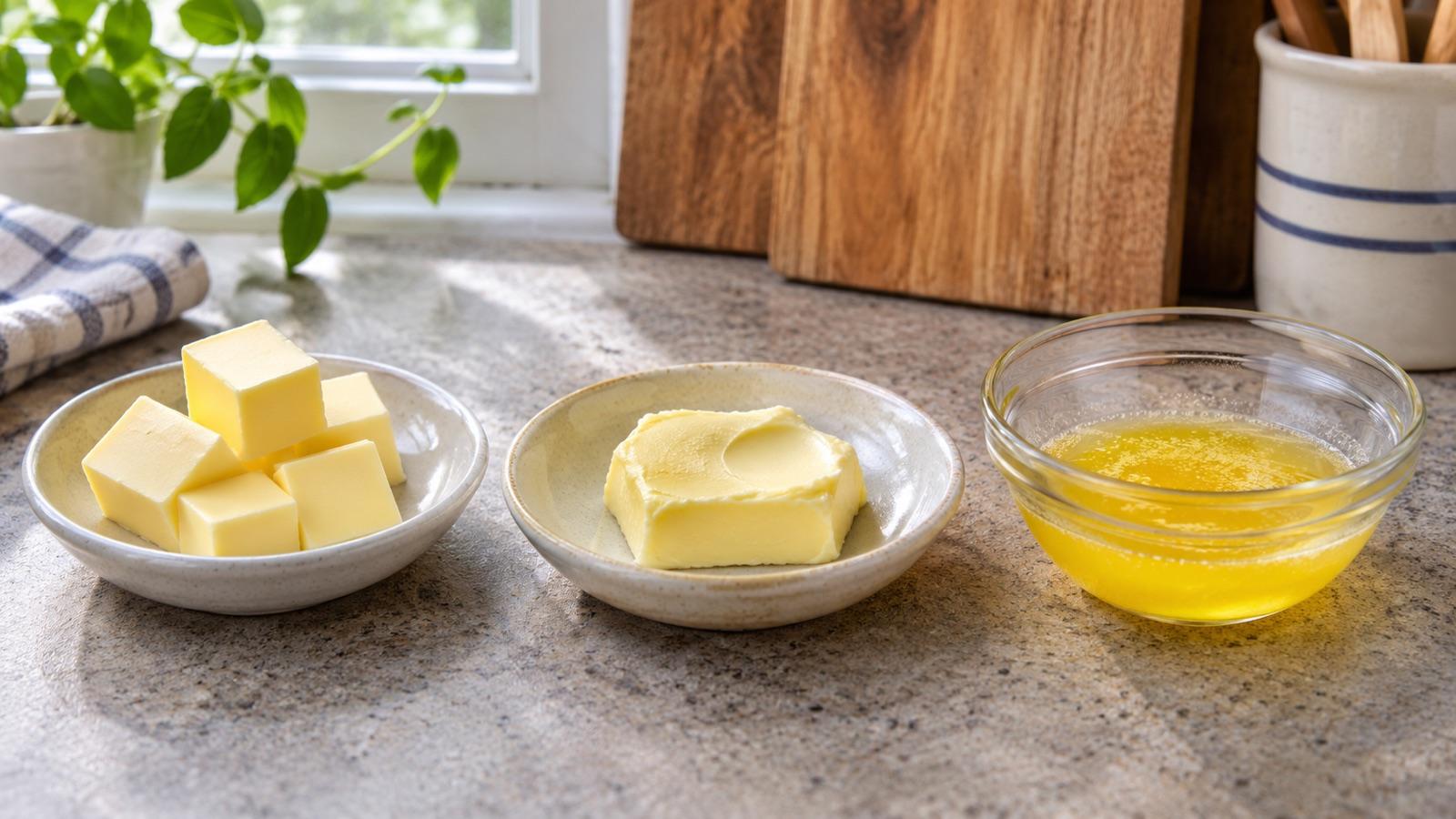
Cold, softened and melted butter behave differently in dough. Cold pieces can remain separate; softened butter can retain air when creamed with sugar; liquid butter cannot build that same structure. Before starting, check the state required as well as the amount. The right choice depends on the mixing method. These cues help you follow an existing recipe consistently rather than change its fat ratio.
Recognise the three states by sight and touch
Cold butter keeps sharp edges when cubed and resists gentle pressure. Softened butter takes an impression from the back of a clean spoon but still holds its shape, without a surrounding puddle of fat. Melted butter flows when the container tilts. “Melted and cooled” may mean liquid but no longer hot at the point specified, rather than solidified again; read the following instructions.
Room temperature is not a fixed kitchen condition. A thick block on a cool winter counter changes differently from thin slices beside a hot oven. Check the centre instead of relying only on elapsed time. Record the product, slice size and starting state. If a piece is soft outside but hard inside, cut it into similar small slices and reassess before creaming.
USDA · Hot food in the refrigerator
What does creaming softened butter achieve?
For creaming with sugar, butter must be firm enough to hold its shape yet pliable enough to mix. Sugar crystals help create air pockets in the butter. Look for a slightly paler mixture with increased volume, rather than merely invisible sugar. Very hard butter may remain in chunks. A greasy, flowing mixture cannot retain the same air structure.
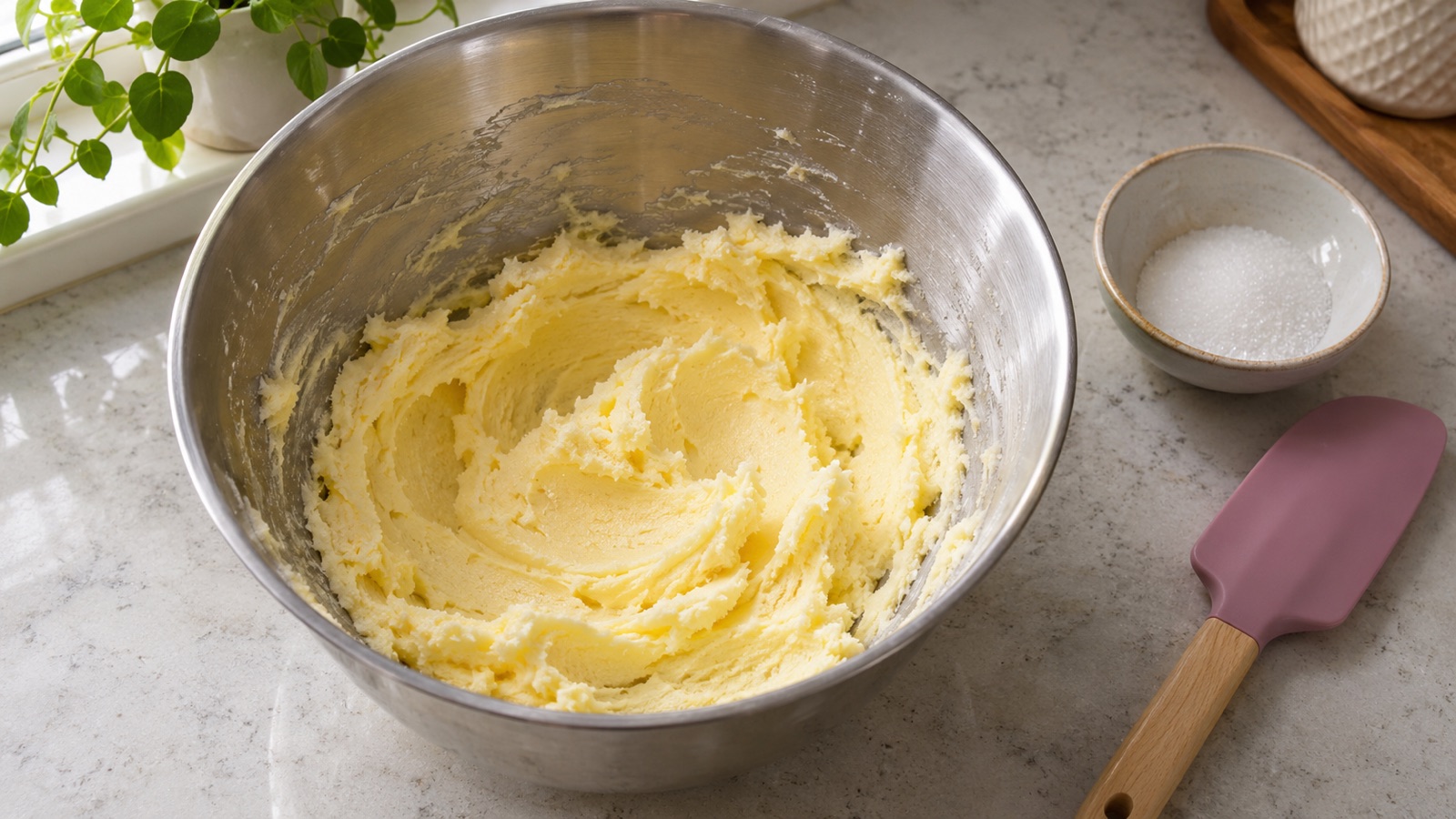
Check both bowl and butter before starting. Scrape dense butter from the sides towards the centre with a spatula, then follow the recipe’s speed and texture cues. Do not move on solely because the stated time has elapsed. Hard yellow pieces at the edge with soft mixture in the middle indicate uneven mixing. Beating melted butter longer will not produce the same result. Heating the mixture to dissolve its sugar also changes the method.
King Arthur · Creaming butter and sugar
Why do cold pieces and melted butter behave differently?
In some tart and laminated doughs, butter should remain in separate pieces or layers rather than blend completely into flour. Firmness and flexibility must balance: overly hard pieces can fracture during rolling, while overly soft butter can smear into the dough. If the dough warms, follow its chilling cues instead of skipping the rest. Do not assume every tart dough requires cold butter; some methods use softened butter.
A mixture calling for melted butter starts with liquid fat. It is not an automatic substitute for creaming air into butter with sugar. If eggs will be added, follow the cooling instructions rather than adding very hot butter directly. Cookie spread also depends on flour quantity, sugar type, dough resting, tray temperature and oven conditions. Record these separately when comparing different methods with the same ingredients.
King Arthur · Butter in pastry
Prepare butter evenly and correct excessive softening
For more even softening, weigh the required amount and cut similar thin slices. A sunny windowsill or a working stove makes control harder; check periodically on an ordinary counter. Microwaves may heat unevenly. If using one, follow its low-power settings and work in short intervals, checking between them; seconds recommended for another appliance are not universal.
If butter is too soft but has not melted, refrigerate briefly and reassess whether it holds its shape. Cooling fully melted butter until solid does not guarantee the exact original structure returns. For delicate laminated work, fresh butter in the state the recipe requires may be more predictable. Do not disguise a greasy creamed mixture by adding extra flour: that changes the ratio. Stop and identify where the method went off course first.
Record a small controlled comparison
You can plan an observation using two small batches of a familiar cookie recipe with gram measurements and clear instructions. Use the specified softened butter in one, and change only the butter’s state in the other. The second batch is a method experiment, not a new recipe with guaranteed success. Keep butter brand and weight, flour, sugar, mixing time, dough rest, portion weight and starting tray temperature consistent.
For example, shape three equal-weight pieces from each batch and space them similarly. Use the same rack and the same cooled tray; note the oven’s condition after the preceding batch too. Measure cooled cookies’ diameter and thickness and describe edge and centre textures separately. Do not invent results beforehand or generalise from a single experiment to every dough. If results surprise you, check weighing, tray and mixing records first. Never assess raw flour or egg dough by tasting it.
İyi Bir Yemek
Food Researcher & Writer
Reader Comments & Contributions
Be the first to share your thoughts on this post