
Baldo, Osmancık, Basmati or Arborio: Which Rice to Choose?
Choose rice for pilaf, milk pudding and risotto: compare Baldo, Osmancık, Basmati and Arborio, with rinsing decisions and a practical small-batch method.

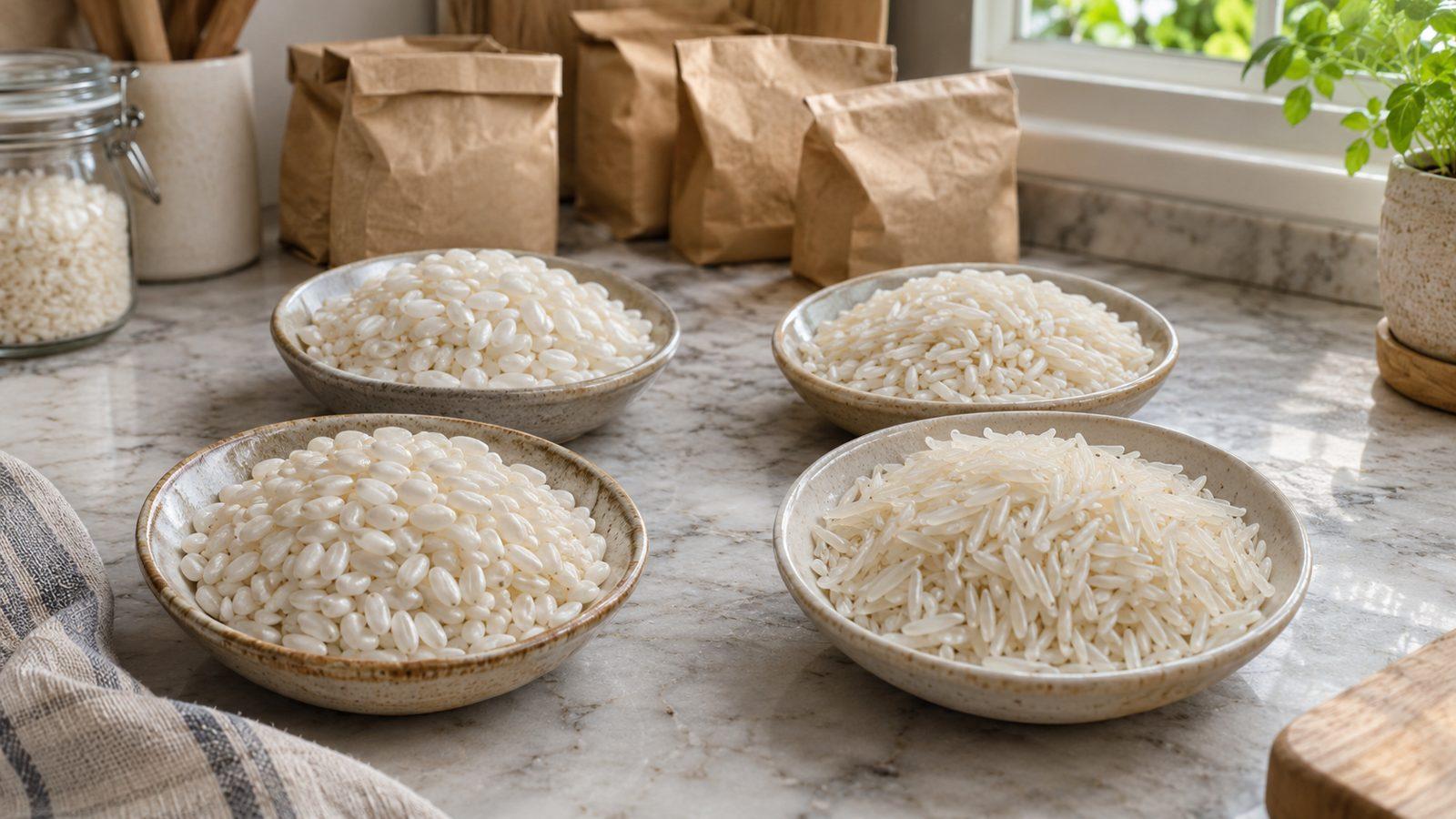
Start with the texture you want: Baldo or Osmancık for Turkish pilaf, Basmati for an aromatic long-grain accompaniment, and Arborio for creamy risotto. This is not a quality ranking. Results depend on the packet, preparation, saucepan and water management. Begin with the packet method rather than one water ratio for every variety.
Choose the dish and its texture first
A picture of large grains on a packet is not enough to decide. Pilaf calls for separate grains cooked through; rice pudding needs a soft texture integrated with milk; risotto needs a flowing consistency with discernible grains. These are different goals. For a dinner party, a small packet of the variety you already know, cooked by your familiar method, offers a more predictable starting point than switching simply because another rice costs more.
Make your shopping list specific: plain pilaf beside vegetables, fragrant rice beside a spiced dish, or risotto as the main course? For the first, grain size may guide your choice between Baldo and Osmancık. For the second, Basmati's aroma becomes part of the meal. Look for Arborio for risotto. For milk pudding, follow the variety specified in your recipe: suitability for risotto does not mean identical cooking time or milk quantity in every pudding.
Compare the four varieties by their kitchen roles
Baldo is an option for Turkish pilaf when you prefer plump grains. Osmancık can also suit everyday pilaf and stuffed vegetables; the Thrace Agricultural Research Institute describes Osmancık-97 as long-grained. Basmati is slender, long and aromatic, making it a useful starting choice for separate grains beside spiced food. Arborio has plumper oval grains and is associated with risotto. These pairings offer a direction for a first attempt, not strict rules forbidding other uses.
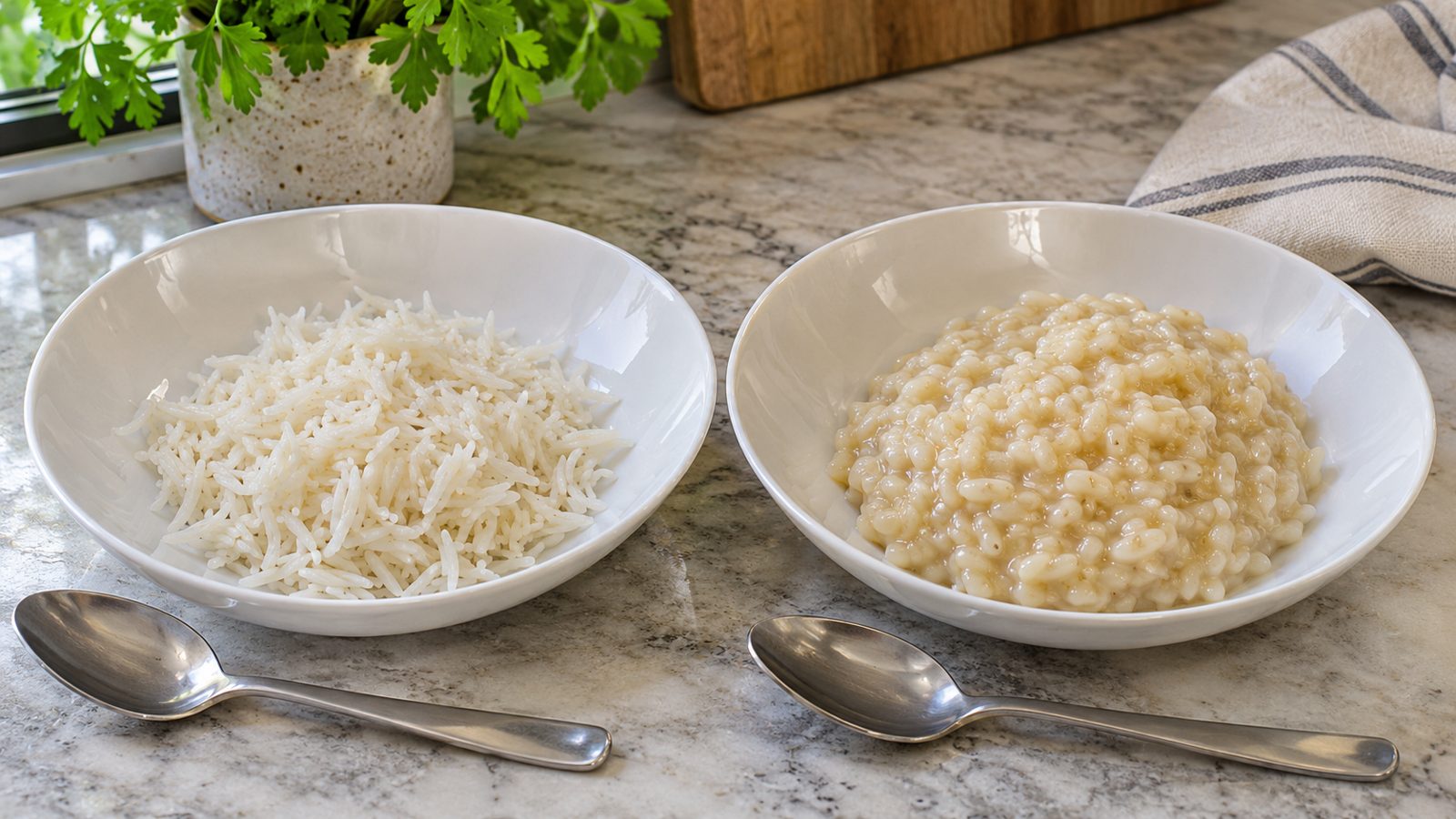
If you are making vegetable pilaf and risotto on the same evening, do not try to cook both from the same packet in exactly the same way. Pilaf aims to preserve individual grains; gradual liquid additions and stirring are part of risotto's method. Shape alone cannot authenticate a variety: read the packet name. The photographs here illustrate texture goals; they are not seed identification, brand quality tests or evidence of a comparative experiment performed in this kitchen.
Trakya Tarımsal Araştırma Enstitüsü · Osmancık-97 · Harvard · Rice · The Rice Association · Types of rice
Do not make rinsing and soaking automatic rules
For separate-grain pilaf, gentle rinsing followed by thorough draining can help remove surface starch when the recipe and packet allow it. Applying the same treatment automatically to risotto changes the method used to build its texture. Respect instructions stating that washing is unnecessary, especially on enriched or specially processed products. Rinsing does not replace the packet's cooking directions or adequate cooking.
If you soak, account for that decision when considering water. Comparing soaked and dry rice with identical added water can mislead. Soaking one sample and not another confuses the variety's effect with the preparation's effect. When the packet recommends soaking, follow its duration and note how you drain. Do not add soaking to a risotto recipe that does not call for it. Record the variety, whether it was washed or soaked, and the cooking method together rather than explaining the water ratio by name alone.
Learn a new packet with a small batch
Before using a new packet for a crowd, make a small trial. Weigh 100 g dry rice on the same scales. If your packet suggests, for example, 150 ml water for that amount, write this in your starting notes. That figure is illustrative, not a universal recommendation: your packet may specify something different. Record rinsing, pan diameter, lid fit, heat setting and time. Scale larger packet quantities proportionally, remembering that evaporation in a very small saucepan may affect the result.
Taste with three questions in mind: is the centre hard, has the outside broken down, and is there loose water at the bottom? A hard centre in a dry pan calls for reviewing liquid and heat management next time. A broken exterior suggests checking excessive cooking, stirring or broken grains. Change one variable at a time: do not adjust water while also changing pan and preparation. This creates useful personal kitchen notes, not a universal ratio for all rice.
Read the packet and avoid common mistakes
Variety, white or brown processing, precooking and recommended method are separate pieces of information. Do not apply white-rice timing to brown Basmati simply because the variety name matches. Nor should precooked rice be treated as ordinary white rice. Many broken grains may not reach the same texture at the same time as intact ones. Buy a large packet once you know it suits your cooking; exploring small quantities first can help avoid waste.
The commonest mistake is transferring a successful water ratio unchanged to another packet. Another is blaming stickiness entirely on the variety while ignoring draining and stirring. A third is judging pilaf by the creaminess desired in risotto. Consider the dish, texture goal and packet method together before buying. Compare equivalent products by net-weight unit price; a higher price does not automatically mean greater suitability for your dish.
İyi Bir Yemek
Food Researcher & Writer
Reader Comments & Contributions
Be the first to share your thoughts on this post